

Today, May 20th, marks the Centennial of the day the Air Commerce Act of 1926 was signed into law, codifying the Civil Air Regulations and establishing a process for aviation airworthiness. Over the last 100 years, we have made tremendous gains in reducing aviation risk and increasing safety.
From 1926 to about 1960, aviation was growing faster than the regulators could catch up, and there were a lot of crashes. The Federal Aviation Act wasn’t signed until 1958, ushering a period of intense technological investment in air traffic control and navigational systems that helped improve air safety alongside advances in aircraft manufacturing.
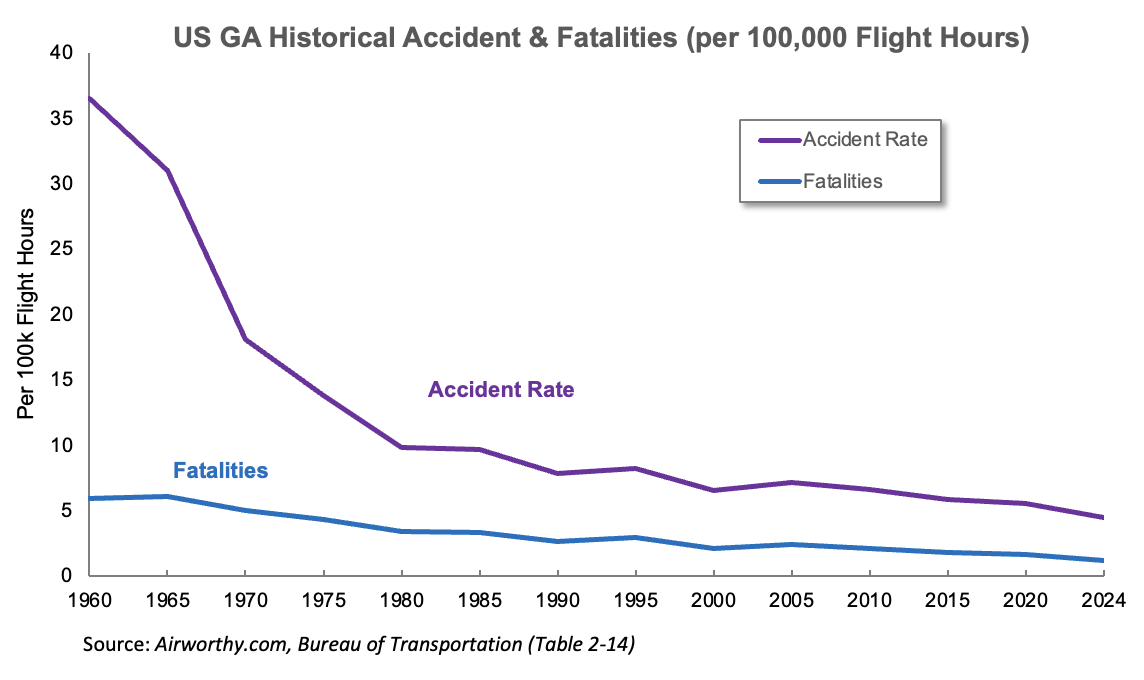
Since 1960, we’ve made great strides across general aviation in reducing the accident and fatality rates. Today in 2024 for GA, they stand at 4.5 and 1.2 per 100,000 hours, respectively. We wrote about this trend last year in our piece, "Wing and A Prayer", in light of headline bias from recent 121/135 crashes.
Given that a majority of GA aircraft are fixed-wing (“FW”) piston aircraft, we ran an analysis using NTSB data (CAROL) breaking out FW certificated piston vs. FW Experimental Amateur-Built piston. This analysis of fatalities per 100k flight hours shows continued improvement for both E-AB and certificated piston fixed wing aircraft, both of which make up about 70% of the 212,000 GA aircraft under N-Registry (See our piece on the GA fleet here).
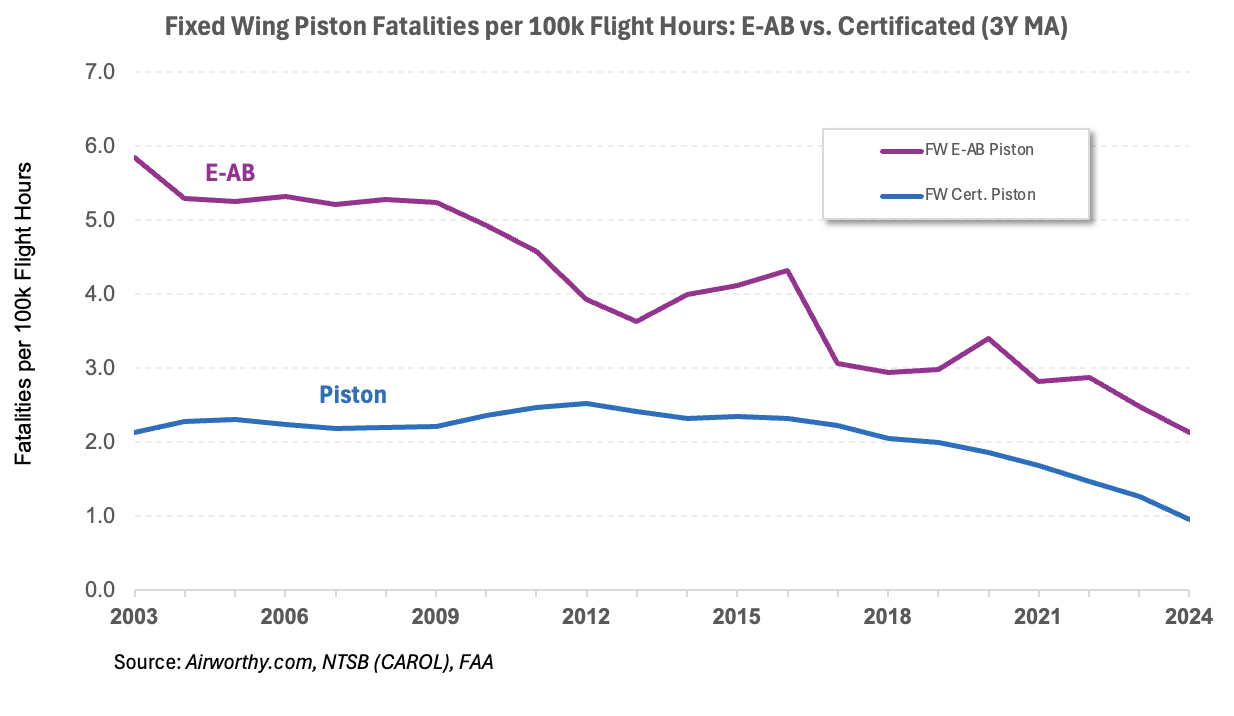
What does this prove? This shows us that the current system is working.
We are dismissive of the recent chatter regarding the removal of annual inspections and doom and gloom reports of General Aviation safety. From our standpoint, GA, and in particular reciprocating engine aircraft, is thriving. While our annual survey pointed out some of the recent headwinds facing GA, we are confident that together in partnership we can solve these.
If you are interested in learning how our software can help you track aircraft maintenance, power your repair shop, or streamline safety, try our 10-day free trial here.

