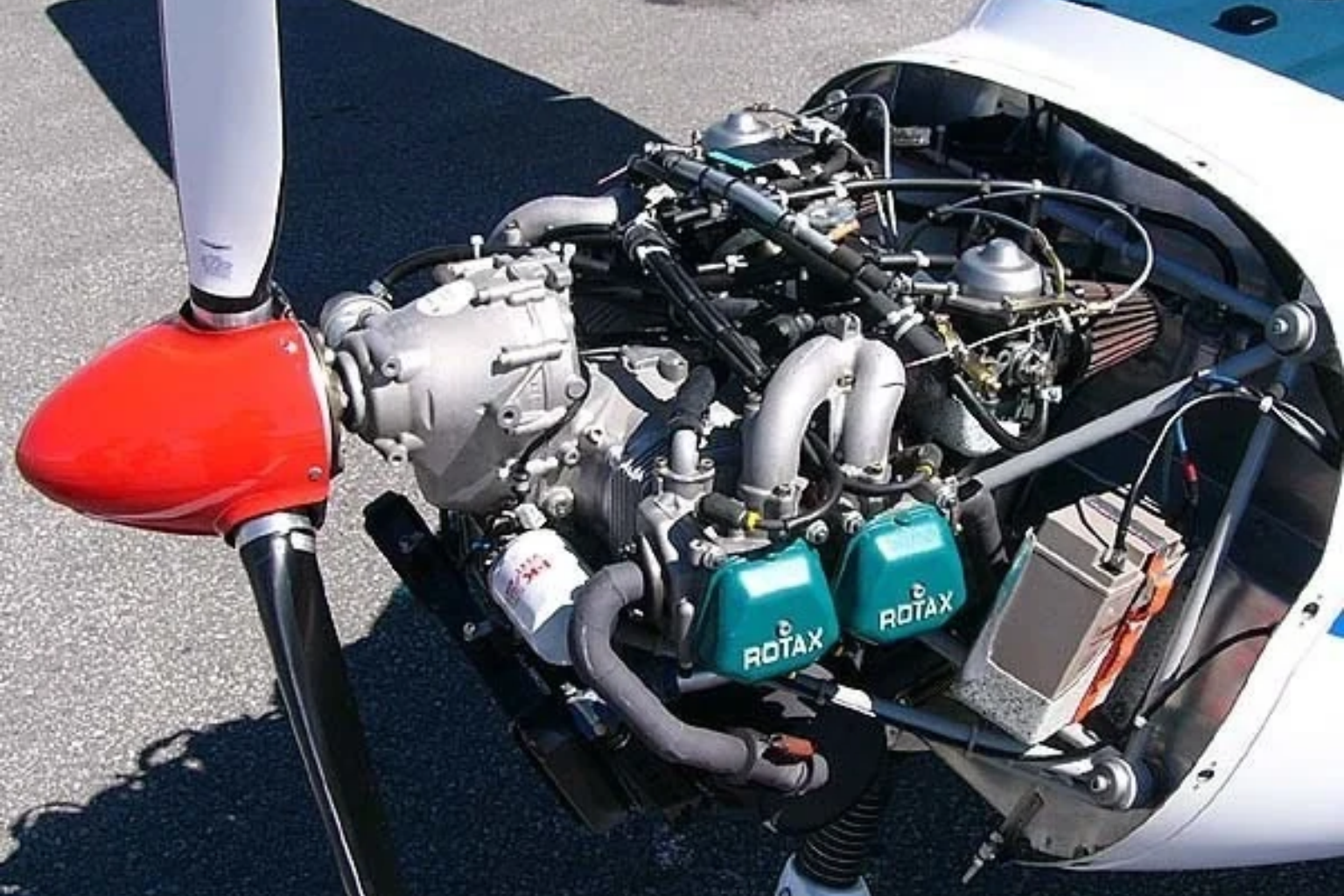

On a recently manufactured Rotax engine, the propeller gearbox was found to be missing two sets of parts that were never installed: the oil spray nozzle and the M7 x 16 screws that hold the propeller shaft bearing in place. Rotax calls it “a deviation from the specified assembly process.” The fix is a worldwide inspection campaign covering roughly 1,500 gearboxes, with the shortest deadline for the newest engines.
The Story: Without the screws, Rotax says, the bearing may shift axially, which “can result in a loss of oil and in a potential in-flight engine shutdown; however, the propeller shaft cannot be pulled out of the gearbox housing.” EASA is more cautious, noting that a shaft pull-out is “unlikely.” The FAA lists the risk as “in-flight loss of engine oil, engine in-flight shutdown, and loss of control of the airplane.”
Rotax issued Alert Service Bulletin ASB-2026-001R00 on June 22, 2026, and EASA mandated it two days later via Emergency AD. FAA AD 2026-16-11 followed, effective August 28, 2026. The FAA justified the urgent compliance window by noting it “has no information pertaining to how quickly this unsafe condition may propagate.”
Field Notes
The Bigger Catch: Roughly 900 of the approximately 1,060 engines on Rotax’s list are what Rotax calls “ASTM Compliant” engines (912 UL, 912 ULS, 912 iS Sport, and 914 UL), as opposed to the certified models. Rotax’s bulletin for them is approved under “the relevant processes of the effective BRP-Rotax quality management system,” and neither the FAA nor the EASA AD names them.
The AD’s reach may be narrower still. Per FAA Advisory Circular 39-7D, ADs “only apply to type-certificated (TC) aircraft, including ADs issued for an engine,” unless the AD says otherwise, and this one doesn’t. That raises the question of whether a certified Rotax installed in an experimental aircraft is covered at all. TBX asked the FAA for clarification and had not received a response at publication time.
Rotax’s companion bulletin, ASB A-2026-001R00, covers the ASTM engines and is marked Mandatory. Under 14 CFR 91.327(b)(3), Special LSA operators must comply with “all applicable airworthiness directives,” but neither AD lists these engines, and according to the FAA’s MOSAIC FAQ, LSA owners “are not required to comply with manufacturer safety directives.” The FAA “strongly encourage[s]” compliance in SAIB 2026-06, and notes that under 14 CFR 91.7, where a safety-of-flight condition exists, “that condition would need to be corrected for the aircraft to be considered in an airworthy condition.” Whatever is stamped on the data plate, owners should verify their gearbox serial numbers immediately.
Why It Matters: Most ADs address fatigue or wear on aging components. AD 2026-16-11 addresses recently built engines that left the assembly line incomplete, which is why the newest engines face the most immediate deadlines. While the FAA AD reaches 180 U.S.-registered certified engines, Rotax’s suspect list runs to about a thousand engines worldwide, most of them not named in either AD. For those owners, the service bulletin is the safeguard, and it only works if they act on it.
Sources: FAA AD 2026-16-11 (91 FR 52236, August 13, 2026); EASA Emergency AD 2026-0121-E (June 24, 2026); BRP-Rotax ASB-2026-001R00 and ASB A-2026-001R00 (June 22, 2026); FAA, MOSAIC Rule Frequently Asked Questions: Maintenance of LSA (citing SAIB 2026-06, March 12, 2026); FAA Advisory Circular 39-7D, Airworthiness Directives (March 2, 2012); 14 CFR 91.327 (eCFR, current as of October 21, 2026).
Need the complete AD? Download the complete AD here.
Research thousands of ADs in seconds. Start your free 10-day TBX trial today!


