
From approved engine and propeller combinations to required placards, equipment, weight and balance data, serial number applicability, operating limitations, and certification requirements, the TCDS is packed with information that can save time and prevent costly mistakes. In this article, we'll share 15 practical tips to help you get the most out of every TCDS.
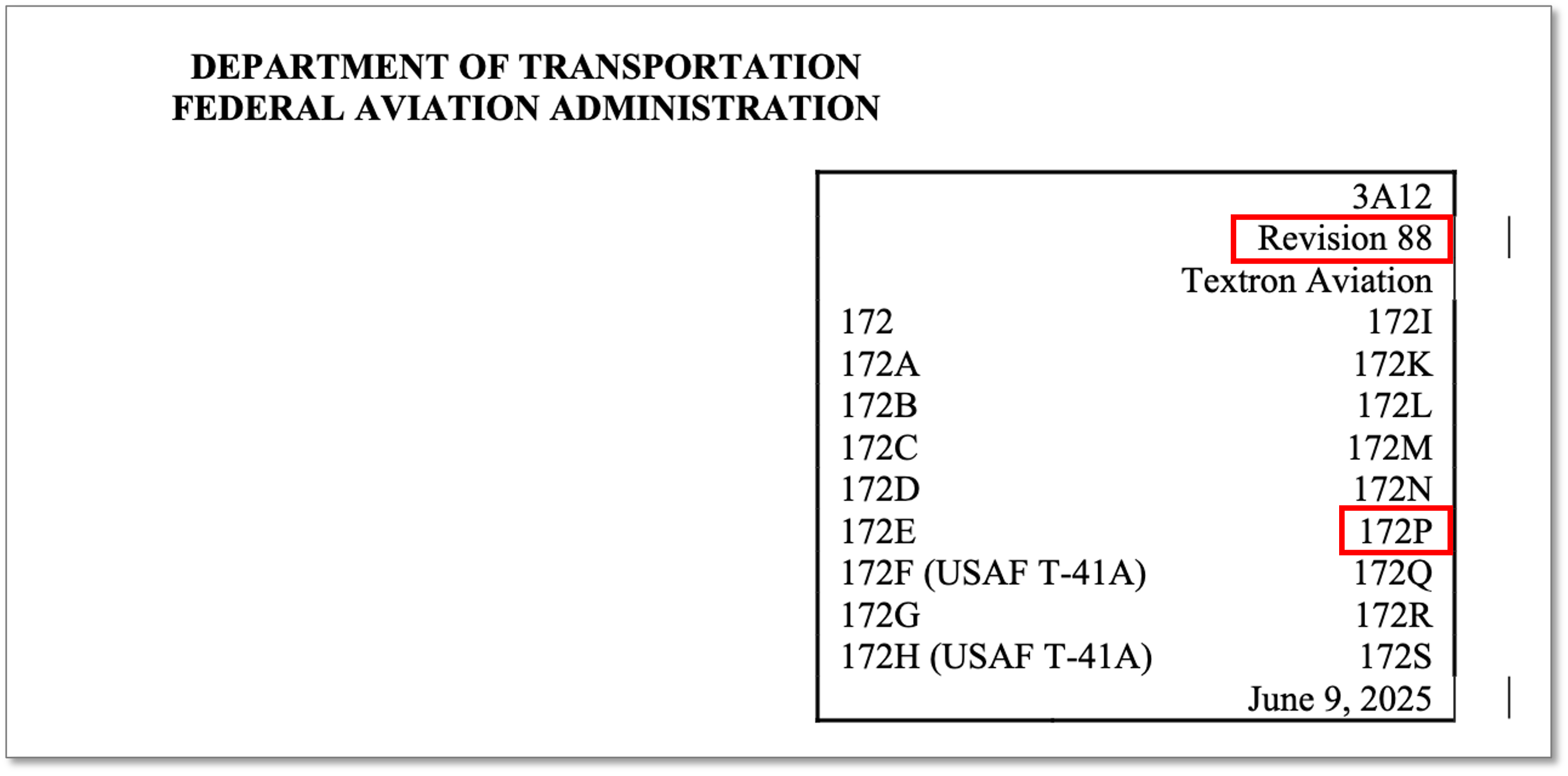
Before diving into the details, check the models listed in the upper-right corner of the first page. Note that many TCDSs cover an entire aircraft family and not just one model. It can get confusing very quickly with so many variants of the same base model. Knowing which models are included can save you time and help you compare differences, identify shared approvals, and uncover information that may not appear on your specific model's page alone. Verify the revision number and date to ensure you’re working with the latest revision. Note that Google and DRS searches will often put you on an OLD revision while TBX will always default to the latest revision.
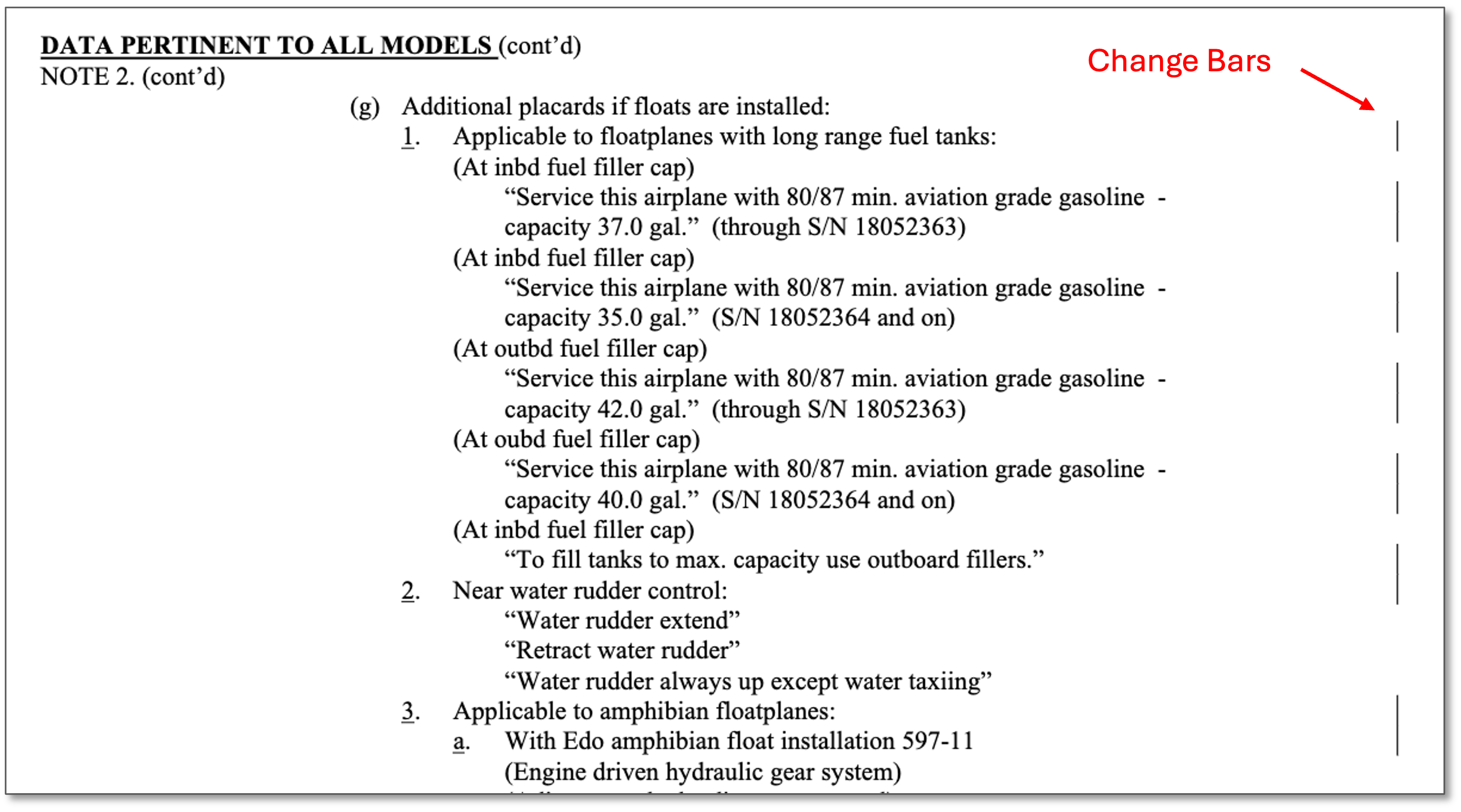
Each time the FAA revises a TCDS, vertical "change bars" highlight the text that has been added or modified since the previous revision. Instead of rereading the entire document, you can quickly identify what's changed and determine whether those revisions affect aircraft you're working on. It's one of the fastest ways to stay current with updates to a TCDS. For a quick way to scan regulatory changes—including updated TCDS—check out our Newsfeed.
At the bottom of the first page you'll also find a box that outlines the last revision/update to each page in the TCDS. This can be helpful in determining discrepancies between different versions of printed TCDS sheets and deciding who's is outdated. They look like this:

Part 43 Appendix A (a)(1) lists alterations that are considered major alterations “when not listed in the aircraft specifications issued by the FAA”. What the FAA means by the phrase “aircraft specifications issued by the FAA” is the TCDS. Approved configurations and alterations in the TCDS, by definition, are NOT considered to be a major alteration. Note: The approved list of equipment may NOT be in the most recent TCDS. For example, in pulling up the TCDS for the Cessna 180 (5A6) you’ll find on page 16 you’ll find it states:
“The equipment portion of Aircraft Specification 5A6, Revision 34, or Cessna Publication TS2000-12 should be used for equipment references on all aircraft prior to the Model 180G. Refer to the applicable Equipment List for the Model 180G and subsequent models.”

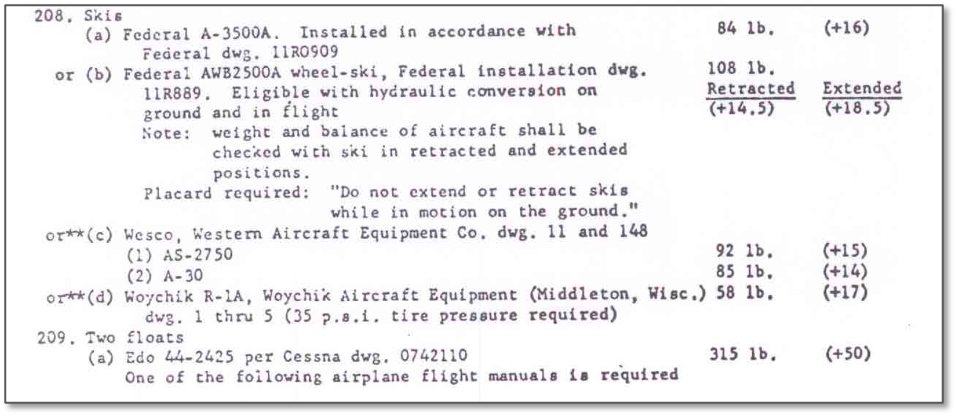
For example, here are a few approved skis as part of the Type Design for the Cessna 180 from Revision 34:
Many TCDSs cover dozens of aircraft variants, and it's surprisingly easy to drift into the next model section without noticing. A single letter or suffix can represent a significantly different aircraft with different engines, propellers, weight limits, equipment approvals, or operating limitations. Always confirm you're reading the section that matches the exact model designation on the aircraft's data plate.

The TCDS identifies the engine and propeller combinations that were approved as part of the aircraft's type design, including any applicable limitations. Before assuming a configuration is correct because it "fits" or has been installed for years, confirm that the exact engine and propeller combination is approved for that aircraft model. This simple check can quickly uncover undocumented alterations or certification issues before they become bigger problems.
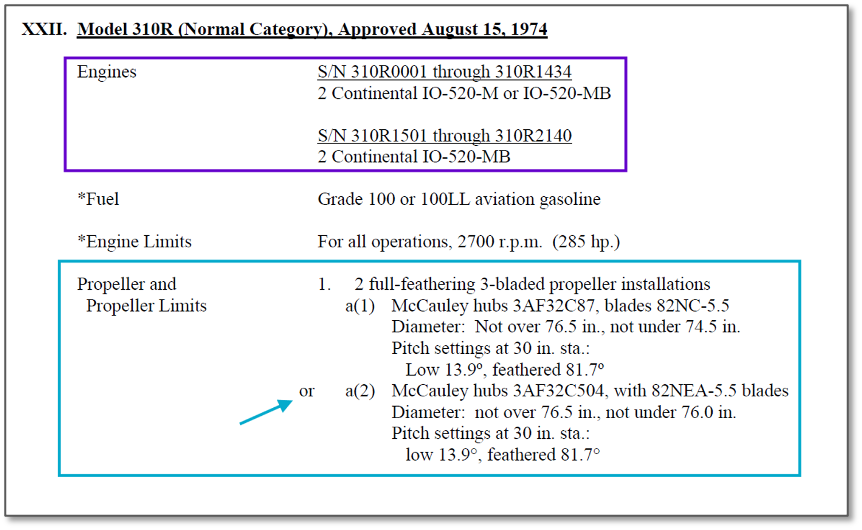
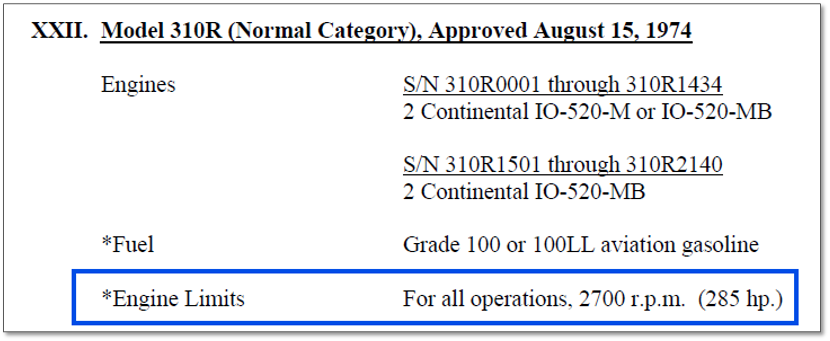
Many TCDSs specify certificated engine limitations such as maximum RPM, manifold pressure, idle speed, fuel grade, and other performance-related parameters. These values provide an FAA-approved baseline when verifying engine operation and can help ensure the aircraft conforms to its type design before it is returned to service.
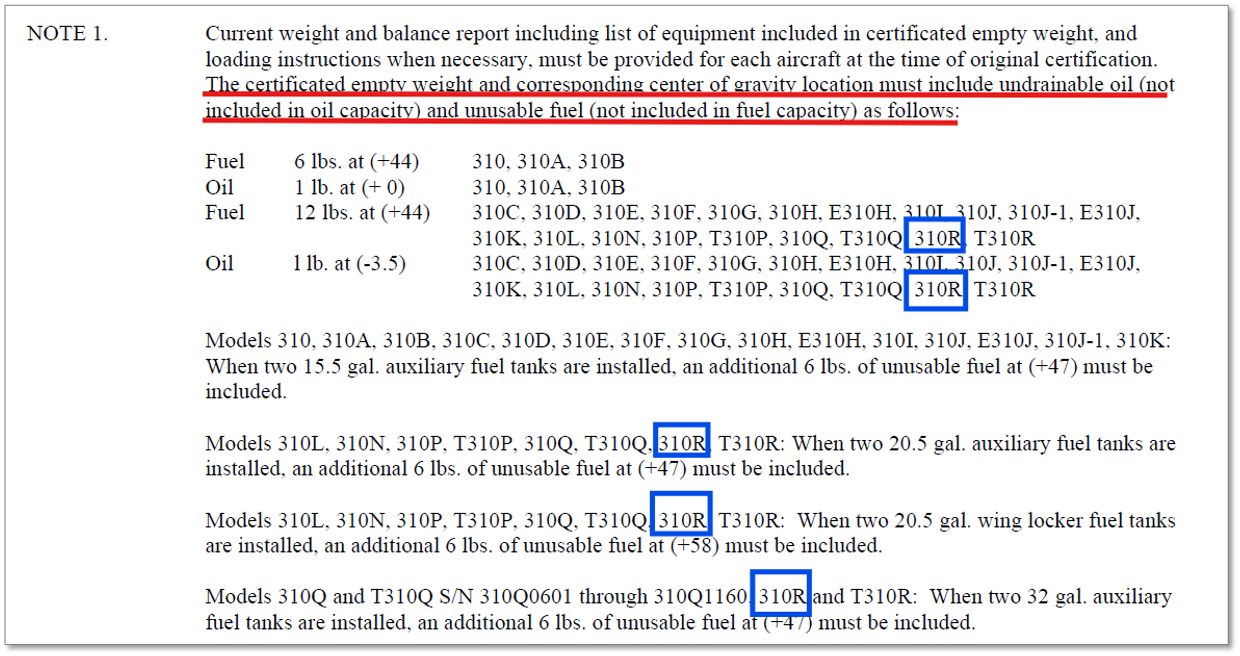
The TCDS contains critical information used in weight and balance calculations, including the approved center of gravity (CG) range, reference datum, and often the unusable fuel and oil quantities that must be accounted for when determining empty weight. Before performing a weight and balance calculation or evaluating an aircraft's loading, VERIFY these values against the TCDS to ensure your calculations are based on the aircraft's certificated configuration. NEVER assume the POH/AFM is correct as these may be out of date.
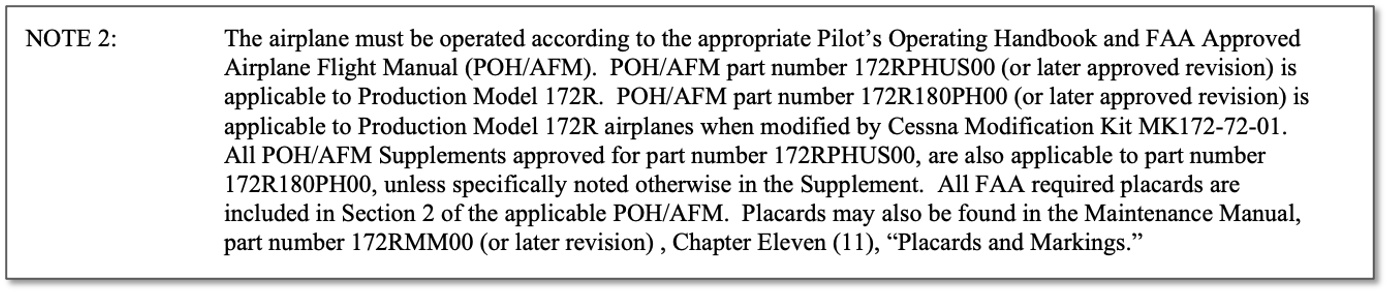
The TCDS is updated throughout an aircraft's life and often identifies newer POH/AFM revisions or supplements required after certification changes, gross-weight increases, engine conversions, or other approved modifications. If you're relying on a decades-old handbook, a quick look at the current TCDS can reveal whether newer approved operating or weight-and-balance information exists. For example, When Cessna introduced the 180 HP conversion kit (Modification Kit MK172-72-01), the TCDS was revised to update CG limits, baggage loading stations, usable oil quantities, max weight, etc. and points to an updated POH. (Also – see Mooney M20J in reference to SB M20-198 / M20-209)
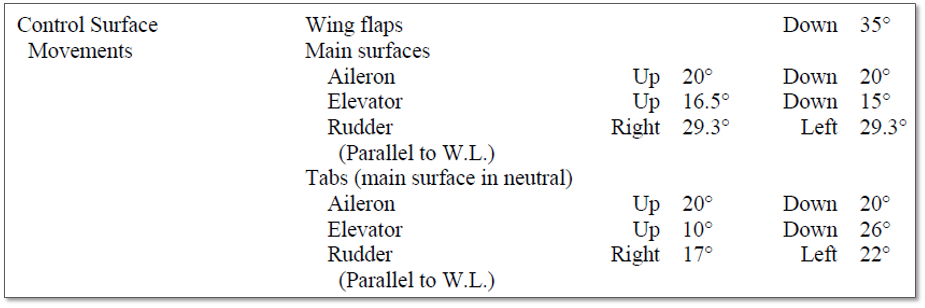
Rigging limitations for flight controls are important—use them, and note the amount of the extremes. At a minimum, you should check deflections for trims every year and flight surfaces every 2 years. If you are changing out actuators for trim tabs, return-to-service is checking the travel to ensure correct deflection. When removing ailerons (i.e., for paint), best practice post re-installation is to check the travel once again.
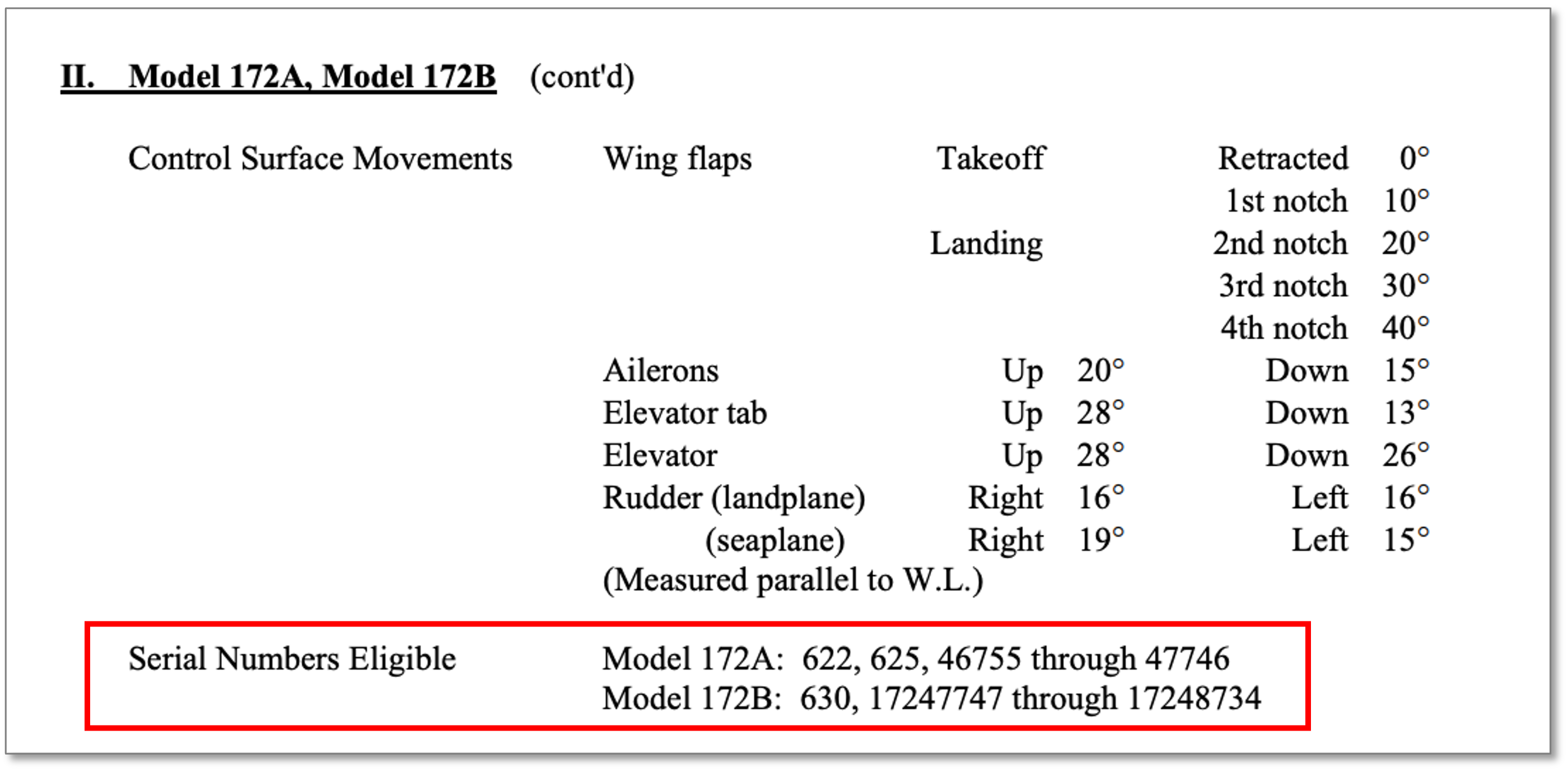
When researching an Airworthiness Directive or determining whether a modification applies, the TCDS can quickly confirm which serial numbers belong to each aircraft model. Use the TCDS to identify the exact certificated model (using the aircraft serial number) before researching maintenance or airworthiness requirements. This is especially helpful for aircraft families with overlapping model designations, production changes, or conversions, where a single model name may not tell the whole story.
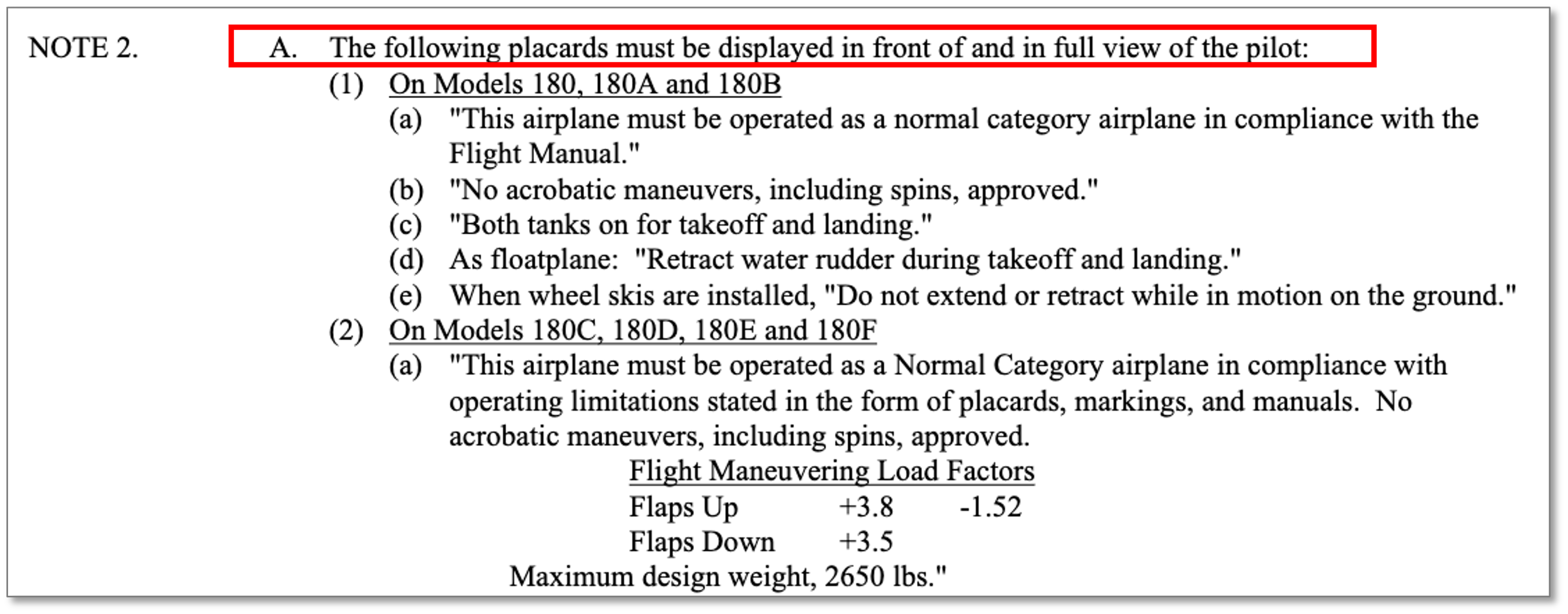
The TCDS specifies the FAA-required placards and markings that must be installed for an aircraft to conform to its type design. During an inspection, repair, or alteration, verify that all required placards are present, legible, and correctly located before returning the aircraft to service. Missing or incorrect placards are easy to overlook but can result in a non-conforming (and therefore unairworthy) aircraft.
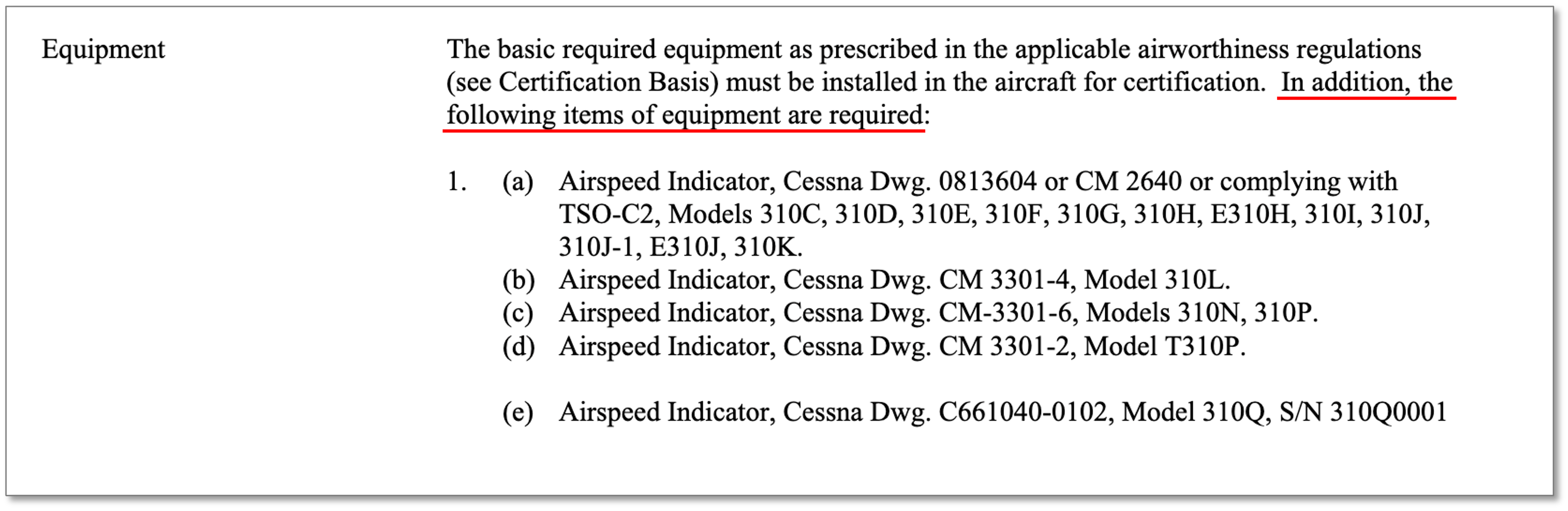
Many TCDSs identify the minimum equipment that must be installed for an aircraft to conform to its type certificate, along with additional equipment required for specific configurations, operating categories, or approved options. These are often buried in the notes. Before returning an aircraft to service, verify that the required equipment matches the aircraft's certificated configuration and intended operation. It's an easy way to catch missing components or configuration discrepancies that might otherwise go unnoticed.
Some aircraft are certificated for Reduced Vertical Separation Minimum (RVSM) operations, allowing them to operate between FL290 and FL410 with only 1,000 feet of vertical separation. The TCDS or its associated certification notes may identify RVSM-approved configurations or reference the required documentation. These aircraft require more than routine altimeter and transponder checks as they must be maintained in accordance with RVSM requirements, including periodic testing of the altimetry system, automatic altitude control system, altitude alerting system, and airframe pressure integrity. Here’s an example of an RVSM capability statement from a PC-12:

Buried in the Notes section, many TCDSs include FAA-approved maintenance requirements, inspections, configuration changes, or operational limitations that are required for continued airworthiness. Some notes reference specific inspections, recurring maintenance, approved service documents, or modifications that must be accomplished for certain serial numbers or configurations. During an inspection, verify that these requirements have been completed and are properly documented in the aircraft's maintenance records before returning the aircraft to service. Ensure you check serial number applicability for certain notes! It’s worth reading the FAA guidance on notes (8110.121) here to help clarify any misconceptions.

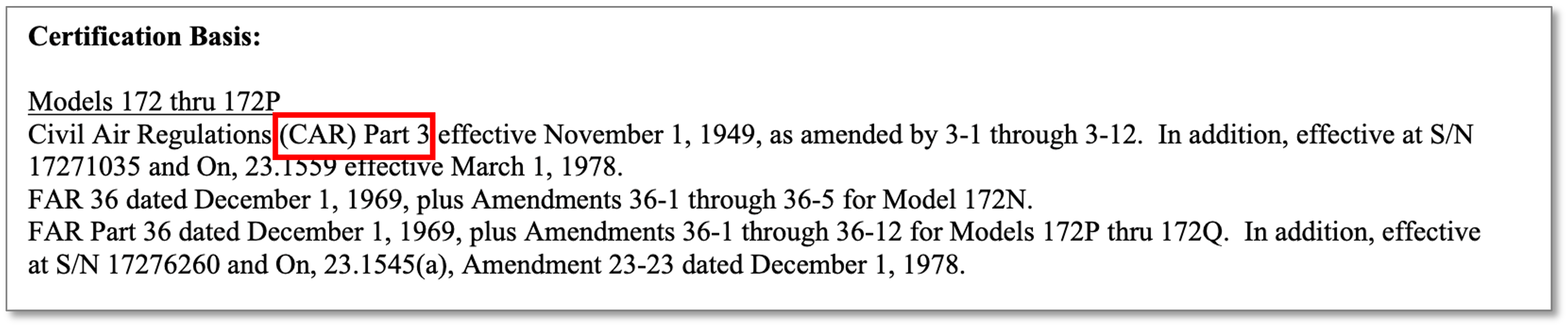
The TCDS identifies the regulations under which the aircraft was originally certificated (such as CAR 3 or 14 CFR Part 23) along with any applicable amendment levels. This explains why older aircraft may legally differ from newer models in areas such as structural requirements, safety equipment, operating limitations, and certification standards. Understanding the certification basis helps you determine what the aircraft was actually required to have, rather than what modern aircraft are required to have.
If you made it this far—thanks for reading. Anything we missed? We'd love to hear from you.

