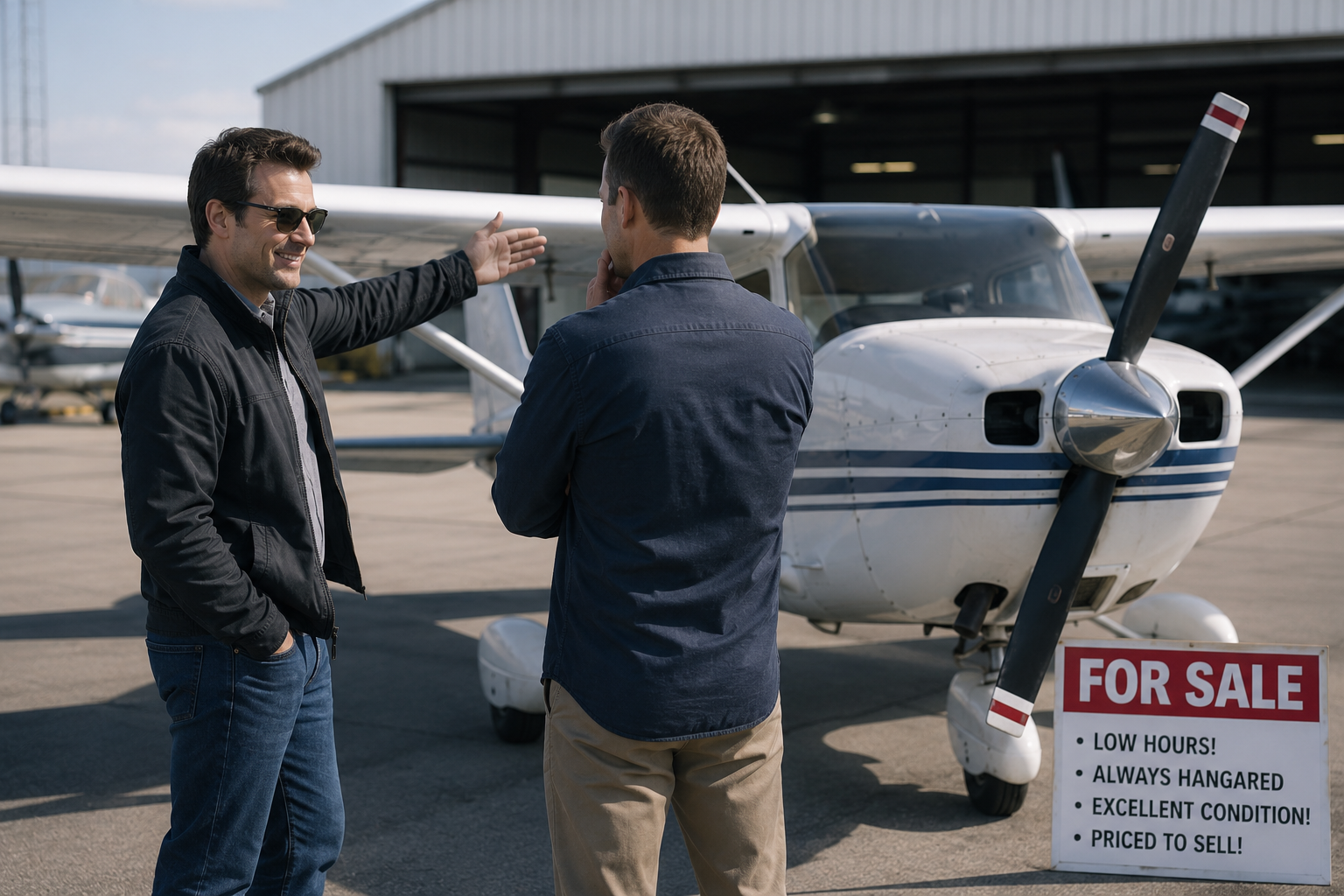

The smartest aircraft buyers learn from other owners’ mistakes. In this piece we’ll break down some of the wisdom passed down over the years so that you can make better, informed decisions in your aircraft purchase journey and avoid some of the potential landmines scattered across the online aircraft listings.
If you are thinking of owning an airplane—here’s a summary of hard-earned rules over the years.
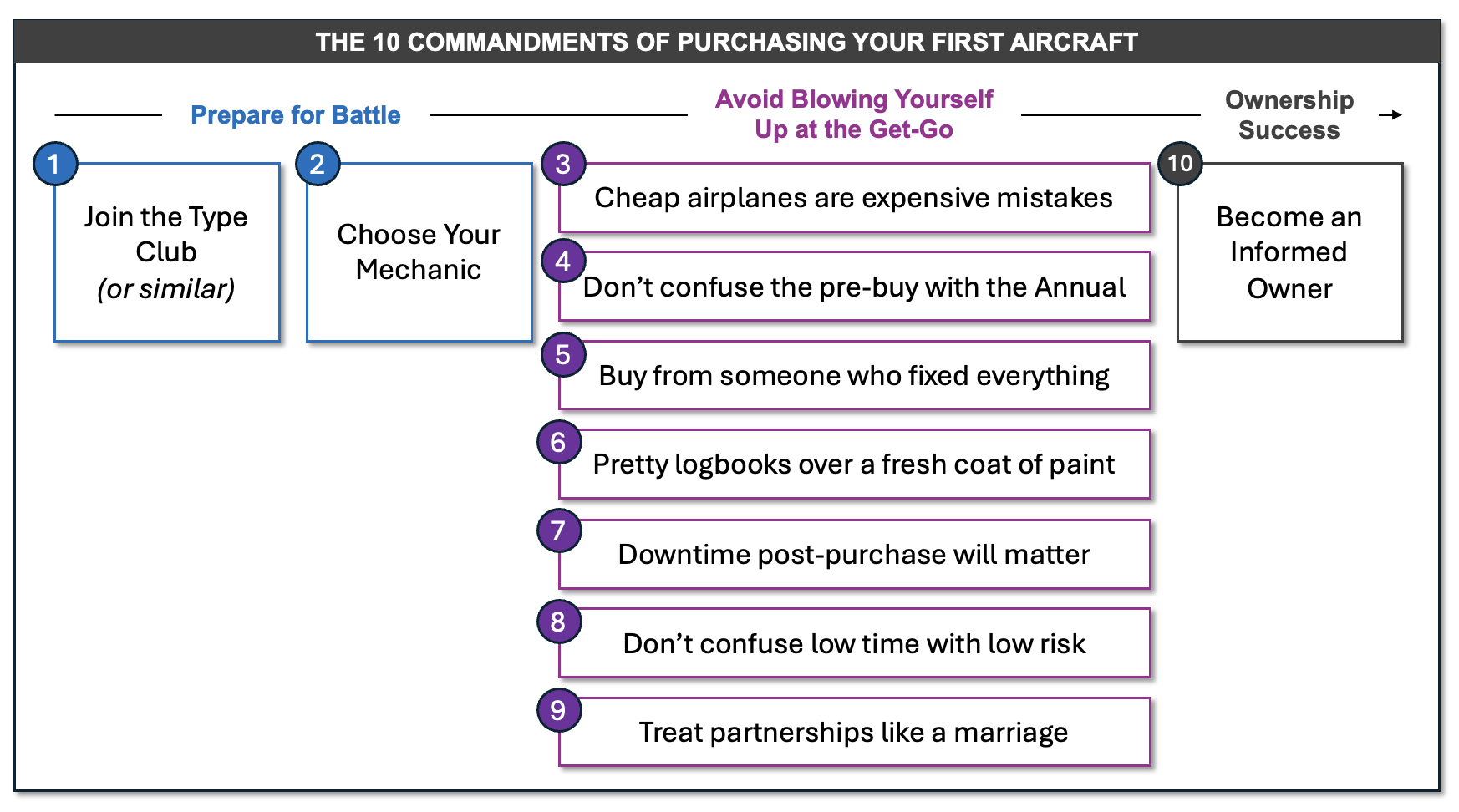
Don’t wait until you’re an owner to join an owners group—that’s where the experts hang out and share information! This might be something like the American Bonanza Society (ABS) or Grumman Owners and Pilots Association, forums such as Piper Aviation & Pilots or BeechTalk, events such as the King Air Gathering or Mooney Summit, or even Facebook groups celebrating such aircraft as the Grumman G-73 Mallard or DHC-6 Twin Otter Group. Engage with these communities!
Every aircraft family/type has its pain points—learn 'em. These range from recurring AD issues, to common corrosion spots, leaks, gear rigging tricks, things you can’t skimp on. Find a mechanic mentor who can save you FAR MORE than they cost by spotting issues you'd never think to look for on your own.
Once you engage the owner communities, you’re going to want to find the (real) experts to help you navigate the buying process, starting with the pre-buy and helping you fine-tune your “buy box” as it relates to your aircraft search. Note: be wary of experts that overly self-promote, often you'll find experts through community recommendations that point to the same individuals/names.
A great mechanic can save you tens of thousands of dollars over your aircraft search AND ownership period, while a poor one can make even a great airplane MISERABLE to own. Great mechanics can serve as mentors and help you find other mechanics if you need someone close to home base.
Far too many people spend more time daydreaming about the trips they’ll take with their friends and family than focusing on the practical issues, like maintenance.
There is nothing more expensive than a cheap airplane. Owners consistently underestimate the cost of hangars, insurance, annuals, maintenance, parts, fuel, fights with partners, among other headwinds.
Some pro tips:
An old seller’s trick is to annual the aircraft so you DON’T have to do a pre-buy and skip over notable deferred maintenance issues. “It’s fresh out of annual and ready for you to fly her away,” they say. Beware: there’s a lot of skimpy annuals out there (sidenote: see the webinar on the $300 annual).
When doing the pre-buy, NEVER use the seller’s mechanic or a shop that has done a recent annual or mx on that aircraft. Get a pair of fresh eyes on that aircraft, preferably by someone who specializes in your model (see rules #1 and #2).
Understand exactly what the pre-buy inspection includes – you’re either looking for deal killers or doing a modified to full annual as it relates to your purchase and the clues you uncover in the inspection. It should be setup in such a way that you can turn off your mechanic and WALK AWAY AT ANY TIME as you learn and uncover more information. Remember to show up AFTER you’ve received the logbooks and done a deep dive on damage history, large repairs or replacements, corrosion, gaps in flying, changes in mechanics, the details of those entries, etc.
Some general tips regarding the pre-buy:
This will SAVE you money in the long run. Small miscellaneous repairs add up. Go in with the expectation that aircraft sellers have deferred maintenance the last couple of years as they were already thinking about selling the plane. Don’t let your guard down by a couple of upgrades here and there, i.e., “new tires and brake pads replaced last month,” when they were avoiding costlier deferred maintenance upgrades / repairs. Keep your wits about you!
While most owners like to say they are the type of owner that “fixes everything”; however you can often verify this for yourself through the logs. What you want to look for are ROBUST logbook entries on the annual showing the mechanic fixed weird, oddball things like a compass card or backseat reading lights. These are often signs the owner had a curious mechanic who was looking for things.
Finally, it should be said that deferred maintenance is almost NEVER cheaper. Nothing gets cheaper on an airplane. Trying to be cheap with maintenance will only cost you more in the long run as deferring maintenance only adds to the future bill coming due.
Paint hides a multitude of sins. Experienced owners (and mechanics) often prefer the worn paint / interior as it allows them to see the TRUE condition of the aircraft, where the corrosion is starting to show, where things are starting to wear out.
Transparency is the real test of a good airplane. Don’t be afraid to pull the thread and ask to speak to the shop that maintained it. Again, ask for the digital copies of the logbooks before visiting the aircraft. Logs will show damage history, or an attempt to HIDE damage history, if it exists. Search NTSB records in tandem. Good logs will demonstrate regular preventive maintenance.
Good paperwork often indicates good stewardship. For more information on logbook best practices, see our awesome Webinar on the topic, "Logbook Do's & Don'ts".
Aviation is cheaper when you’re flying. Sticky valves, corrosion, seals drying out, dead batteries…all of these will impact you down the road. TBO is great, but that may not matter if the airplane does not fly regularly and you got bad cam shaft or lifters. Remember, engines and many major components have calendar time TBOs beyond hours.
Don't confuse low time with low risk (or value)—it requires further examination. When examining the history, make sure the aircraft's been flying AT LEAST every 2-3 weeks. Ask how many hours the plane flew in each of the last few years and make sure it’s at least 30-40. Run the hours calculations yourself over the last 5-10 years, no matter what the seller says.
Finally, no matter how enticing the offer or aggressive the seller, NEVER buy an airplane out of annual.
Often, you’ll run into new aircraft owners that can’t seem to get ANY flight time with their recently purchased aircraft as it's down for maintenance (or upgrades). Ignoring the rules in this article can have a direct impact on your ACTUAL flying time as you wait to find a mechanic (rule #2), annual the airplane post purchase (rule #8), waiting months for parts / upgrades dealing or with overhaul backlogs (rules #1, #3, #4, and #5).
Often, you’ll hear experienced owners tell you not to fall in love with the airplane. The fastest way to maintain objectivity and avoid making stupid mistakes is to bring in that fresh pair of eyes (see rule #1). And as for avionics, it is probably worth repeating here: try to buy with the avionics you want as upgrading is time consuming and expensive!
Understanding the other side's motivations and expectations will go much farther than attempting to put in place the world's strongest Partnership Agreement (in caps!). It should go without saying that you should have PLENTY of discussions with the partners PRIOR to joining a partnership.
It’s also important to stay objective. If you find yourself trying to convince yourself of entering a partnership agreement but something inside you feels “off”, LISTEN TO THAT VOICE! Take your time in getting to know and understand what you are getting yourself into.
If you do decide to enter into a partnership agreement, ensure terms are being met from day one and ensure some kind of enforceability. Scheduling conflicts are real. Have a way to GET OUT if it isn’t working and have a clear understanding of how the sale process would be managed if you do need to unwind.
Finally, once you become an aircraft owner, congratulations! This is not the time to rest on your laurels—the stakes just went up. You don’t need to become an A&P, but you do need to become an informed owner.
Pilot involved maintenance can be helpful in troubleshooting and finding issues as you fly. ASK QUESTIONS! Understand ADs. Read the logbooks. Go to the classes and continuing education clinics around the country to learn more about how your airplane works and what you need to be aware of. You're on a new path to become a better pilot and aircraft owner.
As my CFI once taught me, it’s never too late to make a correction. If you’ve made mistakes in the past, don’t dwell on them, just do better the next time around. There’s a lot of great aircraft and owners out there waiting for another great owner to fly them.
---
Did we Miss anything? Reach out!
Made it this far? Thanks for reading.


