Columbus State Community College: Aviation Maintenance
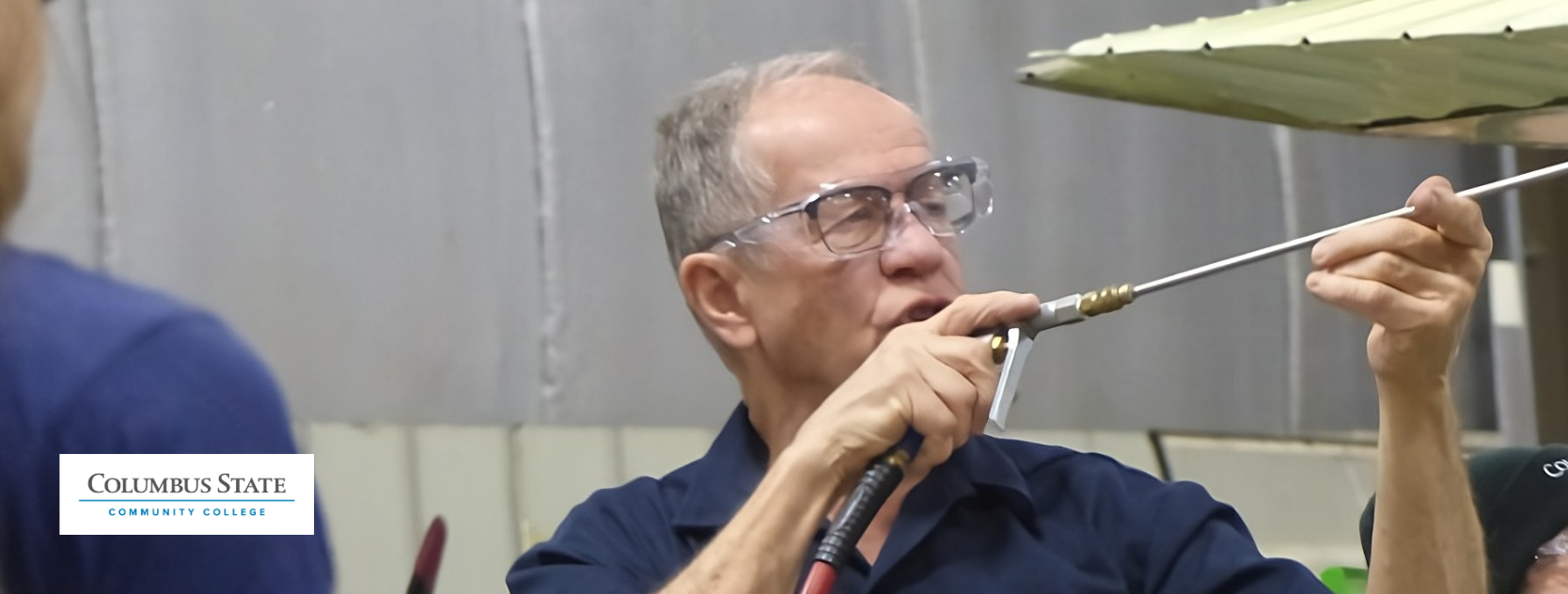
As Assistant Professor of Aviation Maintenance at Columbus State Community College (CSCC),Dave Hessler, A&P, IA, and CFI, is responsible for preparing the next generation of aviation maintenance professionals for the realities of the industry. Over the course of his teaching career, he has watched the field evolve dramatically. From paper manuals and microfiche to digital compliance tools, that perspective gives him a unique appreciation for teaching students how to efficiently find, interpret, and document regulatory information.
"Before TBX, we were using Tdata, and before Tdata it was the FAA's paper copies and microfiche. When I first started teaching, students had to work from stacks of books that were four feet high, along with all the bi-weeklies and ADs for the aircraft. During oral practical testing, there were no computers. If you needed to look up an AD reference, it was all paperwork," Hessler recalls.
That evolution made one thing clear to Hessler: the classroom needed to keep pace with the shop floor. But doing that while managing 100 enrolled students, awaiting list stretching two semesters out, and the compressed timelines of term-based instruction is no small challenge. With everything from Introduction to Aviation to oral practical test preparation falling under his program's scope, Hessler needed tools that could do more in less time. "You've got to expose students to real-world situations, and the real-world situation is using software," Hessler says.
"You've got to expose students to real-world situations, and the real-world situation is using software."
To bridge the gap between classroom instruction and real-world maintenance practice, CSCC adopted Tdata, now TBX, as a core part of its curriculum. The difference was immediate.
"AD compliance and service bulletins are of ultra-high importance. With TBX, it's an extreme contrast from how it used to be. You have everything you need right at your fingertips. It's extremely quick and has a lot of stuff," Hessler says.
Within the TBX Academic License, the full range of shop-floor tasks is available to students—from work orders and invoicing to logbook entries and sign-offs. At CSCC, Hessler keeps the focus on AD research, which sits at the heart of the airman certification standards his students are working toward. "We keep it simple. We are teaching basics so that students get exposed to AD research, and they accomplish that using TBX," Hessler says.
To let students see it for themselves, Hessler also uses the FAA's own Digital Records System alongside TBX in the classroom. "We do also use the FAA DRS to show students, to compare. The students can see how much easier it is to use TBX than the DRS," Hessler says.
Roll out across the program was straightforward. "When we started using the Academic License, setup was very simple. We take a student name and student ID and assign one license to them, and they have that license until they graduate, then it's changed over to another student," Hessler explains.
That simplicity extended to the full instructor team. "Everyone of our instructors uses TBX — everyone from full-time to part-time to contract. We assign ADs and have the students do AD research. They typically have no problem. They are very comfortable pulling up ADs using TBX,"Hessler says.
The platform also gives instructors full visibility into each student's progress. Workorders, compliance checks, and logbook assignments can be pushed directly to students, reviewed, and annotated, all within TBX.
With a pass rate of about 80–82%, CSCC mechanics are showing up on shop floors ready to work. "I've never had any complaints that my students don't know how to look up ADs or anything like that," Hessler says.
"Using a platform like TBX helps us teach students faster. And when they graduate and are on the shop floor, using a platform like TBX will save them an immense amount of time and can make them more profitable."
For Hessler, himself a mechanic examiner, the reward is watching students come full circle. "You could have someone who comes in and knows nothing about aviation maintenance at all, and they start learning basic math, physics, aerodynamics, then it goes all the way to 100-hour inspections for both airframe and powerplant. I always ask them about an appliance AD because that takes a couple of extra steps to figure out — but TBX has everything there for this," Hessler says.
What sets the academic experience apart is what students carry out the door with them. "With TBX, the students are able to build their file the whole time they are in school. By the time they graduate, they have a whole listing of airplanes with AD searches, and that's really kind of nice," Hessler says.
That preparation translates directly to career readiness. "Using a platform like TBX helps us teach students faster, it fits into the program's time constraints much better. And when they graduate and are on the shop floor, using a platform like TBX will save them an immense amount of time and can make them more profitable," Hessler says.
For Hessler, the value of TBX in the classroom is straightforward: "TBX isa great product and provides great resources to help us better prepare students," Hessler says.
Get hands-on access to TBX and see if it fits your workflow.

