

Inspect Smarter, Not Harder: FAA Modernizes Turboprop Inspections

Inspect Smarter, Not Harder: FAA Modernizes Turboprop Inspections
Today, the FAA announced a new rule (effective Jan 11, 2027) expanding the inspection program options available under 14 CFR § 91.409 to single-engine turbine-powered airplanes, while also addressing unmanned aircraft and clarifying several other maintenance regulations.
-> Read the rule here.
Previously, owners of single-engine turbine-powered airplanes generally had to rely on annual, 100-hour, or progressive inspections. Beginning January 11, 2027, they can instead elect to follow a manufacturer-recommended inspection program under § 91.409(f)(3), without obtaining individual FAA approval of that program.
Roxanne Rosado, Head of Airworthiness at TBX, said, "As a former aircraft manager for a charter operation of several single engine turboprops, having to implement and maintain an Approved Aircraft Inspection Program (AAIP) for the fleet was time consuming due to constant manual revisions being issued by the manufacturer."
Previously, § 91.409(e) required large airplanes (over 12,500 pounds), multiengine turbine-powered airplanes and turbine-powered rotorcraft to use one of the inspection programs specified in § 91.409(f). Those options included manufacturer-recommended inspection programs. However, single-engine turbine-powered airplanes were EXCLUDED from that provision (d), leaving them generally subject to annual, 100-hour (when applicable), or progressive inspections. This new rule brings single-engine turbine-powered airplanes into the § 91.409(e)/(f) framework.
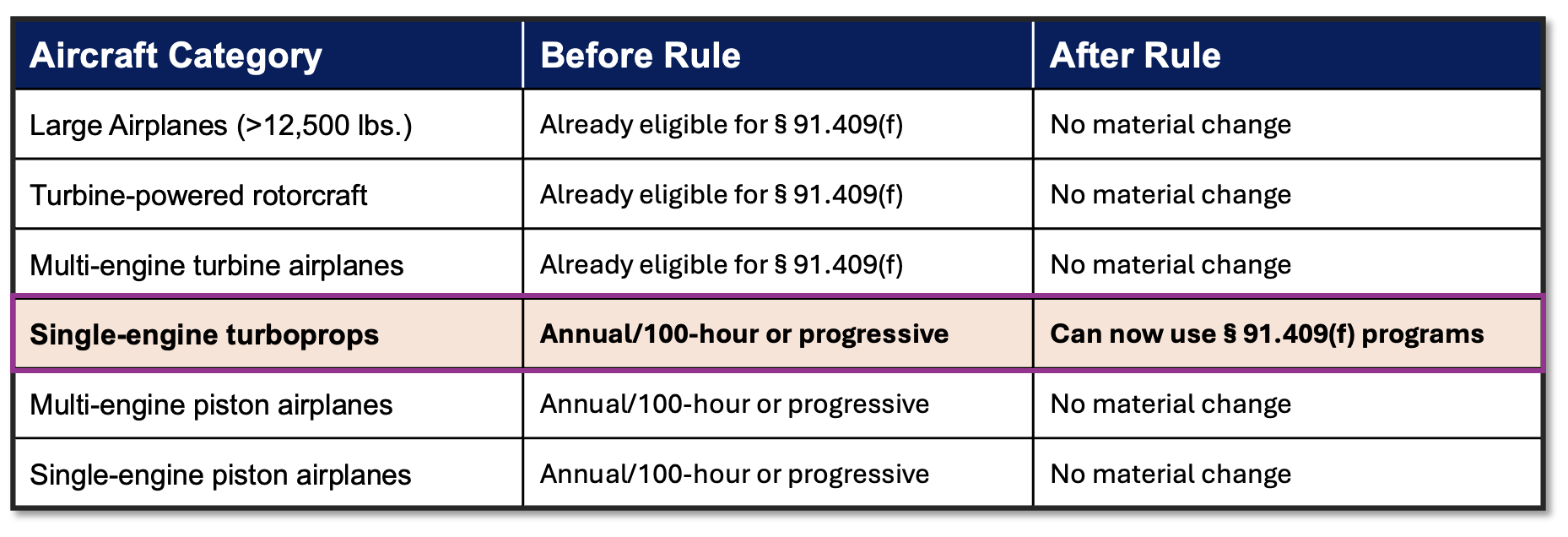
What exactly are 91.409(f) maintenance programs?
Under 91.409(f), eligible aircraft owners and operators can choose among four options:
- A Part 121/135 continuous airworthiness maintenance program (CAMP) inspection program, provided the regulatory conditions are met.
- A Part 135 Approved Aircraft Inspection Program (AAIP) currently in use by an eligible certificate holder.
- A manufacturer-recommended inspection program, using the most current program available at the time of selection.
- An owner/operator-developed inspection program, individually approved by the FAA.
The third option, a "manufacturer-recommended inspection program", is a significant development for single-engine turboprops. With the recent change, a privately operated PC-12 owner could select an eligible Pilatus manufacturer-recommended inspection program rather than continuing with conventional annual inspections.
Crucially, the manufacturer-recommended program DOES NOT require individual FAA approval under § 91.409(f)(3) (Note: the owner-developed program under (f)(4) still requires approval).The selected program must be identified in the aircraft maintenance records and made available to the inspecting personnel. Mandatory airworthiness limitations, life limits, and applicable ADs remain binding.
It is important to note that Part 135 operators already had various inspection program options, including AAIPs under § 135.419 and CAMP requirements for applicable aircraft. The new rule explicitly clarifies that Part 135 aircraft operating under an AAIP identified in their OpSpecs are exempt from duplicative § 91.409 inspection requirements.
Roxanne added that there was tremendous amount of friction at times between the fleet operator and the FSDO, who would have approved their AAIP, adding:
The process of going through the FAA approval extended the process even more. Sometimes, we were undergoing revisions while the aircraft was in maintenance, which created another layer of complexity when it came time to issue the return to service paperwork. We adopted the content of the manufacturer’s inspection program in our AAIP, therefore I am glad that now operators will have the opportunity of a more streamlined, easier to maintain maintenance program for their operations.
Saving Time & Money
In the release, the FAA argued that manufacturer-designed programs can reduce unnecessary disassembly and reassembly, improve aircraft availability, and potentially improve safety, citing (mostly) data from Textron regarding the cost of an annual inspection for a single-engine turboprop and the annual cost of maintaining (current) tech pubs for a Part 145 repair station. The FAA cited savings of ~$9.5k per aircraft and assumed the average annual for a single-engine turboprop cost ~$17.5k (in 2024 dollars, pg. 11).
The rule clarified some of the historical requirements under § 145.109, which required CRS to have "current" versions of the their technical documentation for performing maintenance and inspections. The updated rules take the ambiguity out and allow maintainers to fall back on 43.13 ("how we do maintenance"), stating that:
Paragraph (d) [under § 145.109] is a prescriptive requirement to have certain documents on hand and current at the time the work is performed. The use of the word “current” causes issues in that the most current manual is not always the correct one to use. In addition, the inclusion of this prescriptive list is not necessary, as repair stations are already required to follow 43.13. In addition, this type of list isn’t used for any other operators.
We believe this is a good thing, as it sheds light on the unnecessary "tax" facing maintainers from the poor distribution and usage of current technical data today.
The final rule was published November 10, 2026, and becomes effective January 11, 2027.
Make Aircraft Maintenance Easier with TBX.
Spend less time researching ADs, managing maintenance records, and tracking compliance. TBX brings the tools you need together in one place, helping you save time and stay organized.
Get started in minutes
Stop guessing which ADs apply
AD applicability and compliance tracking for your whole fleet.
Start your 10-Day Free Trial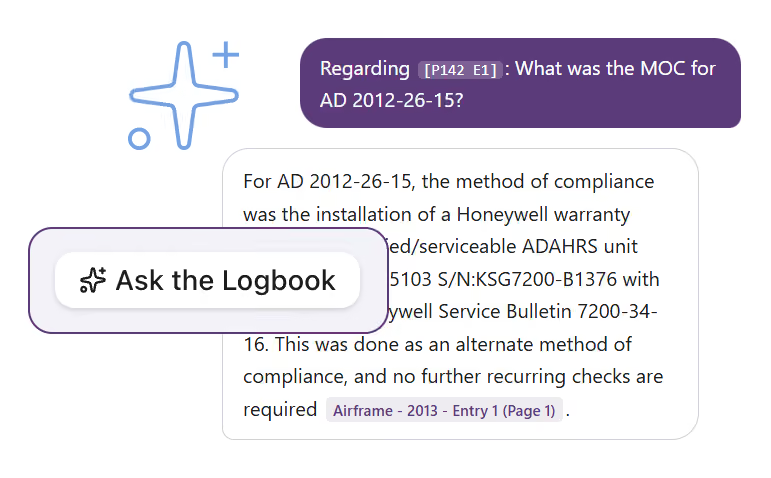
LogIQ: AI for Logbooks
Turn decades of aircraft records into searchable intelligence. Ask questions, spot potential discrepancies, and get cited answers in seconds.
See How LogIQ Works
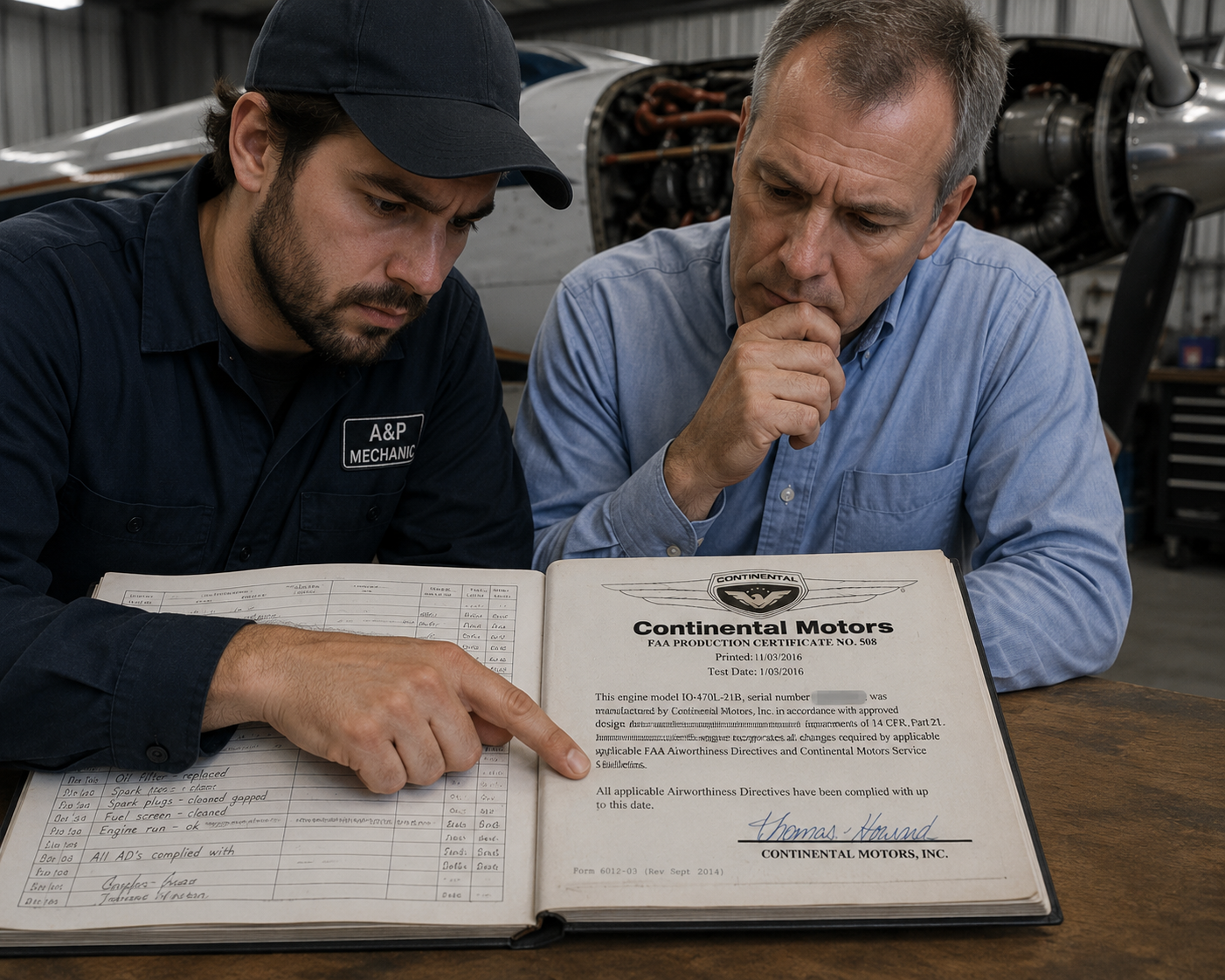

Put Your Aircraft Records to Work
TBX brings AD compliance, maintenance tracking and AI-powered logbooks together for owners, shops and operators.


