
AD 74-08-09 R3: Transport Category - Placards, Ashtrays, and Door Inspections

AD 74-08-09 R3: Transport Category - Placards, Ashtrays, and Door Inspections
Aircraft
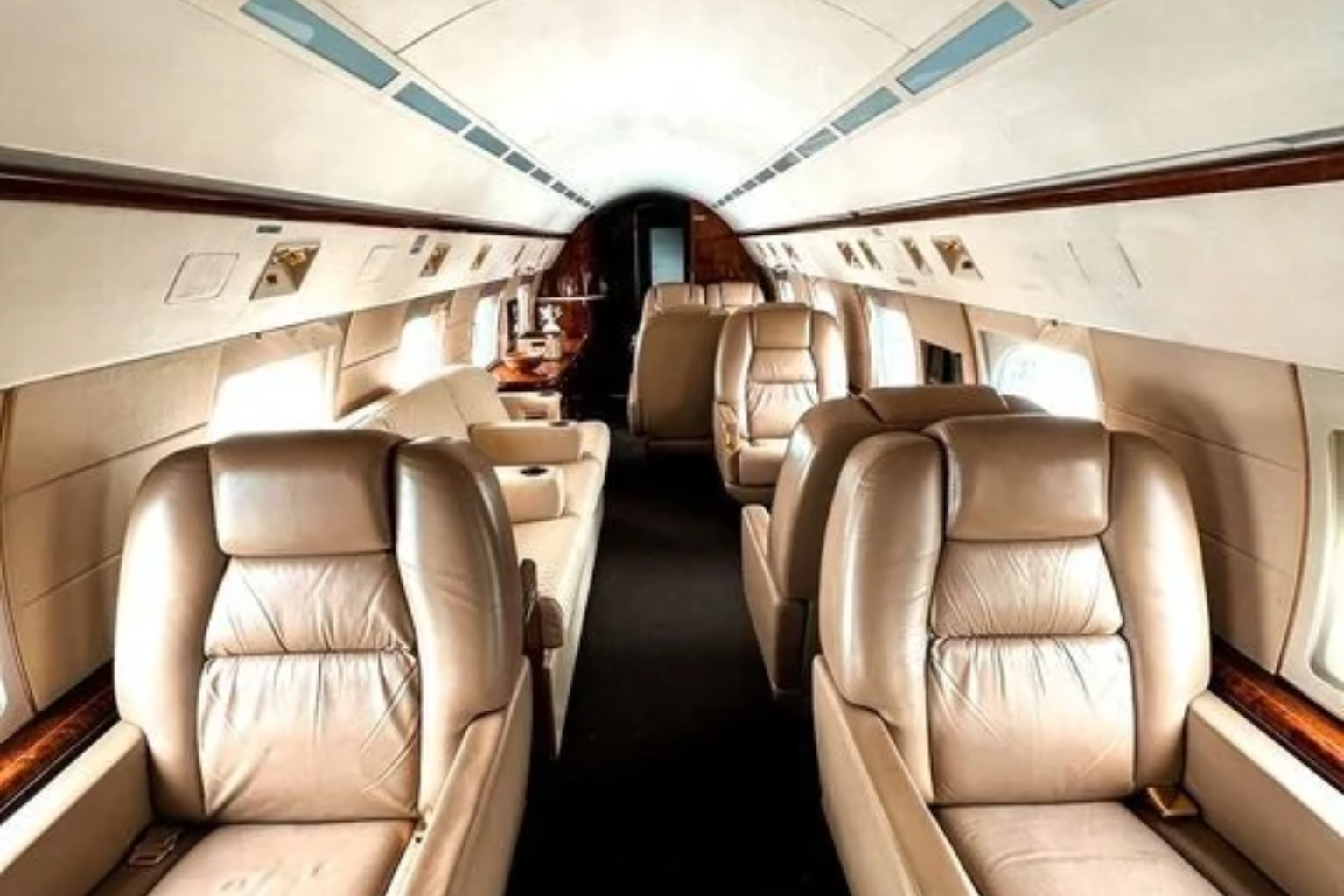
Transport-category aircraft with lavatory paper or linen waste receptacles, including business jets
Status
Final rule (AD), effective March 28, 2012
Owners and operators must maintain lavatory no-smoking placards, required ashtrays, and crew announcement procedures, and inspect waste receptacle doors every 1,000 flight hours.
Free Trial • No Credit Card
Still No Smoking: The 1974 Lavatory AD That Applies to Your Business Jet (AD 74-08-09 R3)
Smoking has been banned on U.S. airliners for decades, and in the lavatory since 1973. Yet a transport category airplane with a trash bin in the lav still needs a "No Smoking" placard on both sides of the lavatory door, a "No Cigarette Disposal" placard on the waste flap, an ashtray outside the door, and an inspection of the waste receptacle doors every 1,000 hours. The rule behind all of that dates to 1974, and it's one of the ADs our users frequently ask about. The reason it's still here is simple: some people will light up on an airplane anyway, even though it's illegal. And a cigarette tossed into a bin full of paper towels is exactly how a lavatory fire starts.
The Story: On July 11, 1973, Varig Flight 820, a Boeing 707 from Rio de Janeiro to Paris, made a forced landing in a field short of Orly after fire and smoke filled the cabin. 123 of the 134 people aboard died. The French investigation said the fire "appears to have started in the washbasin unit of the aft right toilet." A cigarette thrown into the waste bin is often cited as a possible cause, but it was never proven.
In 1974 the FAA issued a group of cabin fire protection ADs. In the FAA's own words, it acted "following an inflight fire which originated in a lavatory area." AD 74-08-09 first appeared in April 1974, and the version most of its requirements still date to took effect on August 6, 1974.
The AD has been revised three times since:
- R1 (1995). A commenter asked the FAA to drop airplanes type-certificated after 1974 whose designs already met the AD. They pointed out that as written, it applied "to all transport category airplanes ever built." The FAA declined.
- R2 (1996). Added dispatch relief for a missing lavatory door ashtray.
- R3 (effective March 28, 2012). Kept every requirement and gave operators more time to replace missing ashtrays.
The FAA's stated unsafe condition is unchanged: "fires occurring in lavatories caused by, among other things, the improper disposal of smoking materials in lavatory waste receptacles."
Field Notes:
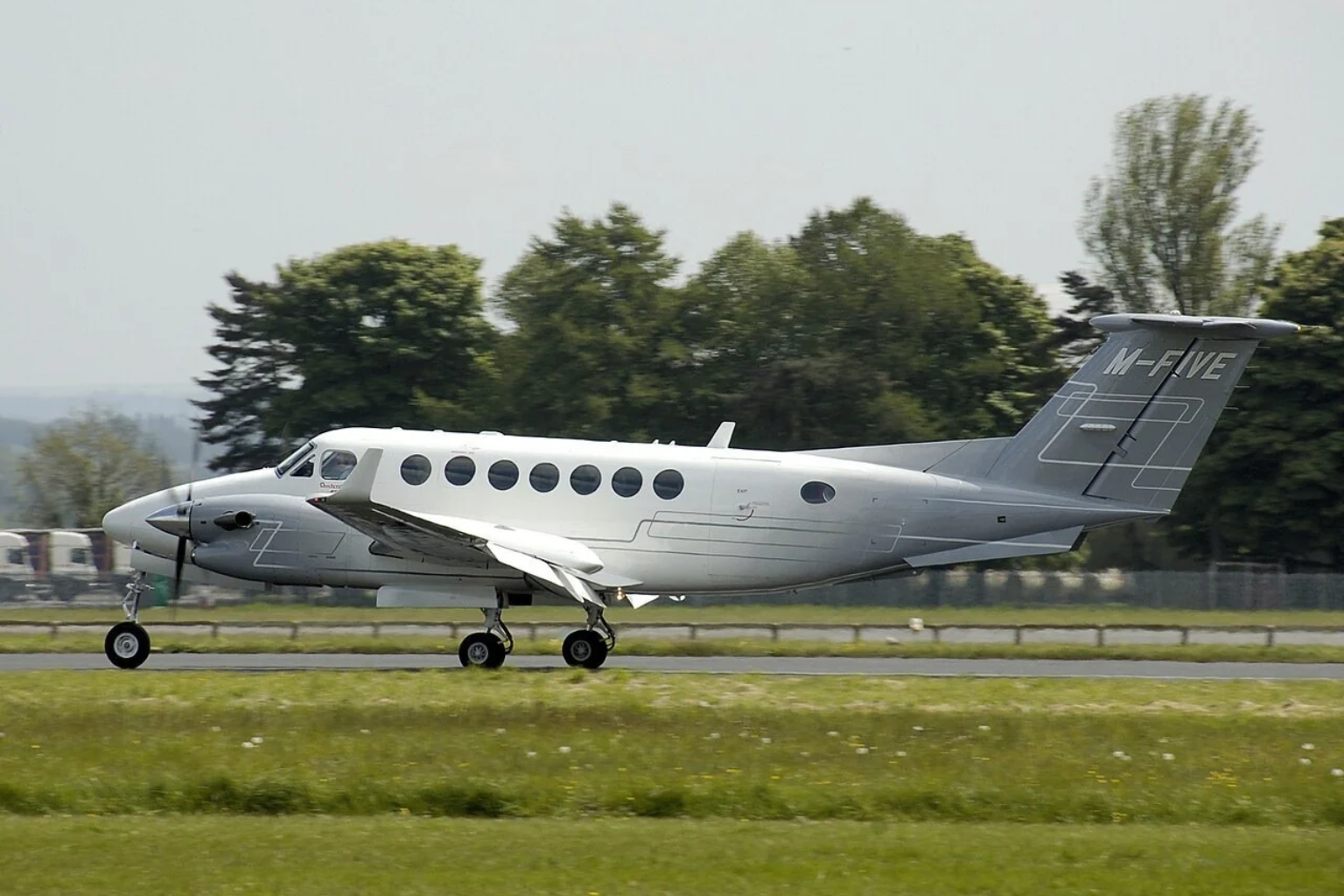
Why bizjet operators get caught. The AD follows the lav, not the model. It applies to transport category airplanes, "certificated in any category, that have one or more lavatories equipped with paper or linen waste receptacles." Airline maintenance programs have tracked it for decades. Flight departments and Part 135 operators flying Part 25 business jets are the ones it surprises, because nobody thinks of a Challenger or a Falcon as an airliner. A custom interior, a VIP completion, or a single aft lav makes no difference: if there's a paper or linen waste receptacle, the AD applies.
Table 1 lists 29 type certificate holders. Besides the airliner makers, it names Bombardier, Cessna, Dassault, Gulfstream, Hawker Beechcraft, Learjet, Sabreliner and others. The FAA says the list is "not limited to" those manufacturers.
What it requires:
- Placards, paragraph (g). A placard on each side of each lavatory door, either over the door knob, on the door or next to it, reading "No Smoking in Lavatory," "No Smoking," or the equivalent symbol. Placards "must be of sufficient size and contrast and be located so as to be conspicuous to lavatory users." Each paper or linen waste disposal door also needs a "No Cigarette Disposal" placard, in words or symbology.
- Announcement, paragraph (h). A procedure for a crewmember to tell occupants that smoking is prohibited in the lavatories. It has to happen right after the No Smoking sign goes off after takeoff, or before each takeoff if the airplane has no No Smoking sign. On an airliner, the flight attendants cover this in their announcements. On a business jet flying without a cabin attendant, the pilots are the only crewmembers aboard, so the lav smoking prohibition belongs in their passenger briefing, and the procedure should be written down in your flight department's procedures or briefing card.
- Ashtray, paragraph (i). A "self-contained, removable ashtray on or near the entry side of each lavatory door." One ashtray can serve more than one door if it can be seen readily from the cabin side of each door it serves.
- Missing ashtrays, paragraph (j). With several lavatory doors, you can fly with up to 50 percent of the door ashtrays missing or inoperative, provided half of the missing ones are replaced within 3 days and all of them within 10 days. With only one lavatory door, which covers most business jets, you get 10 days. The AD says its provisions prevail over the MMEL.
- Recurring inspection, paragraph (k). At intervals not to exceed 1,000 hours' time-in-service from the last inspection, inspect all lavatory paper and linen waste receptacle enclosure access doors and disposal doors "for proper operation, fit, sealing, and latching for the containment of possible trash fires," and correct any defects.
The 1,000-hour clock on a business jet. The interval is hours only, with no calendar limit. On a jet flying a few hundred hours a year, the next inspection can be two or three years away, so track it as its own recurring item. Because the interval runs from the last inspection, you can always do it early at any scheduled inspection and reset the clock. Moving it later to match your inspection program is different: paragraph (l) lets your PMI adjust the interval to "an established inspection period" if you supply data to justify it. Operators without a PMI would need an AMOC.
The FAA also refused to treat a task card from the manufacturer's Maintenance Planning Document (MPD) as automatic compliance: "Operators determine how to track the implementation and compliance of the AD requirements for their fleet."
Checklist for your flight department:
- "No Smoking" placard (words or symbol) on both sides of every lavatory door, readable and conspicuous
- "No Cigarette Disposal" placard on every paper or linen waste disposal door
- A removable ashtray on or near the entry side of each lavatory door, visible from the cabin
- A written procedure for the no-smoking-in-the-lav announcement. With no cabin attendant, that means the pilots' passenger briefing, given right after the No Smoking sign goes off after takeoff, or before each takeoff if there's no sign
- The 1,000-hour waste receptacle door inspection tracked as a recurring AD item with its own sign-off, not just as a card in the inspection program
- A plan for a missing ashtray: 10 days on a single-lav airplane, and the MMEL doesn't override that
Why It Matters: This AD is easy to dismiss as a relic. The placards are cheap and the ashtray looks odd on a non-smoking airplane. But the recurring part is the one that matters: a waste bin door that doesn't seal or latch is a fire waiting for fuel. People still try it, too. In October 2022, a passenger on an EL AL 777 from Tel Aviv to Bangkok reportedly smoked in the lav and threw the butt in the trash, and the paper inside caught fire before the crew put it out.
On a business jet, the lav is a few feet from the cabin and there may be no flight attendant aboard to catch it. And because the trigger is a cabin feature rather than a model or serial number, the AD is easy to leave off a tracking program. That's why it's on TBX's suggested appliance list. If you fly a Part 25 jet with a lav and a trash flap, track 74-08-09 R3 like any other recurring AD: placards checked, ashtray in place, and the waste receptacle door inspection logged every 1,000 hours.
Sources: FAA AD 74-08-09 R3, Amendment 39-16951, Docket FAA-2010-0956 (77 FR 10352, February 22, 2012); AD 74-08-09 R1, Amendment 39-9214 (60 FR 21429, May 2, 1995); AD 74-08-09 R2, Amendment 39-9680 (61 FR 32318, June 24, 1996); FAA AD 74-08-09 original issue (Amendment 39-1917, effective August 6, 1974); FAA Amendment 25-74 preamble; BEA probable cause for Varig Flight 820 via Aviation Safety Network; Holm and Davis, "Clearing the airways," Tobacco Control (2004), for the 1973 lavatory smoking ban; news reports of the October 2022 EL AL Flight 81 lavatory fire.
Does this AD apply to your aircraft?
TBX helps you track AD applicability and compliance across your fleet, so you know where every aircraft stands.
10-day free trial
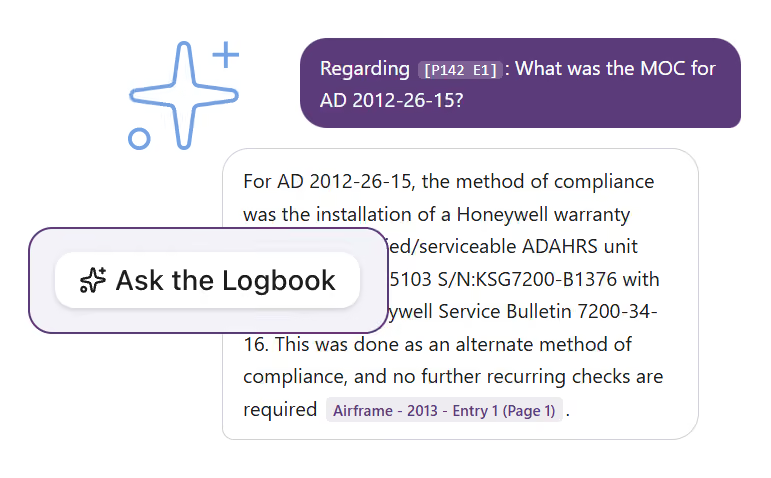
LogIQ: AI for Logbooks
Turn decades of aircraft records into searchable intelligence. Ask questions, spot potential discrepancies, and get cited answers in seconds.
See How LogIQ WorksMore ADs of the Week
Stay Ahead of Every AD
TBX tracks applicability and compliane across your fleet, and LogIQ turns your logbooks into answers, so next week’s AD is already on your radar.


