
AD 98-01-06: Optional Fix, Mandatory Inspection: Marvel-Schebler Two-Piece Venturi

AD 98-01-06: Optional Fix, Mandatory Inspection: Marvel-Schebler Two-Piece Venturi
Aircraft
Marvel-Schebler MA-3, MA-3A, MA-3PA, MA-3SPA, MA-4SPA
Status
Final rule (AD), effective Feb 13, 1998
Owners and mechanics must inspect affected two-piece carburetor venturis at each annual, 100-hour, or progressive inspection. A one-piece conversion is optional.
Free Trial • No Credit Card
On September 21, 1991, a Cessna 172P lost engine power shortly after takeoff from DuPage County Airport in West Chicago, Illinois. It struck a light pole and a semi-trailer, and the pilot and passenger were killed. The NTSB found that "the carburetor primary venturi, normally held in place by retaining clips, had separated from the carburetor." The part had been drawn into the intake manifold and lodged between the No. 2 cylinder's intake valve and its seat. The NTSB faulted the pilot's decision to turn back at low altitude, but cited the venturi failure, and the operator's disregard of service bulletin MSA-2, as contributing factors.
The Story: Marvel-Schebler MA-3 and MA-4 series float carburetors, found on Continental A-65 through O-300 and Lycoming O-235/O-290/O-320 engines, originally used a two-piece venturi: a small primary venturi held inside the main venturi with retainer clips. A venturi is a narrowed throat: air speeds up as it squeezes through, its pressure drops, and that low pressure draws fuel from the main nozzle. The primary venturi sharpens that suction right at the nozzle. As a Marvel-Schebler technical expert later explained to the NTSB, a loose primary venturi "would shake and move," disrupting the vacuum and the fuel flow, "which can result in a loss of power."
Precision Airmotive's Service Bulletin MSA-2 (first issued October 15, 1990) cited "reported instances of primary venturi failures causing rough engine operation or engine power loss." The bulletin was marked MANDATORY with a compliance time of "Immediately": replace the two-piece with a one-piece combination primary and main venturi casting. The failure mode was not new. In 1963, AD 63-22-03 warned that on the larger MA4-5 carburetor "the primary venturi may become loose," wearing at its support legs and retaining clips until it could come out entirely, and required a one-piece venturi at the next carburetor removal or overhaul. When the NTSB recommended an AD in 1985 (Safety Recommendation A-85-25), it knew of 26 service difficulty reports, seven accidents, and one incident involving loose or missing two-piece venturis. In 1987 the FAA declined. By the time of West Chicago there had been two more accidents, nine in all, and four more incidents. On January 24, 1992, the Board sent the FAA an urgent recommendation, A-92-5. It called for an AD on all MA-3A, MA-3PA, MA-3SPA, and MA-4SPA carburetors requiring "the expedient replacement of two-piece venturi systems" with the one-piece casting per MSA-2. The Board said the fix should be made, if feasible, "within the next 10 hours of time-in-service."
The FAA took a slower path. AD 93-18-03, issued September 8, 1993, required annual inspections of two-piece venturis and a one-piece conversion within 48 months.
Then the fix started causing its own problems. In the FAA's words, AD 98-01-06 was "prompted by service difficulty reports describing engines that fail to attain rated power, run rough, or experience power loss after installation of a one-piece venturi in accordance with the existing AD, and by incidents of forced landings of aircraft powered by engines modified to comply with the existing AD." Precision's own nozzle bulletins (MSA-7, -8, -9, 1994–95) explained that in some instances the one-piece venturi made the main fuel nozzle more sensitive and changed its atomization, producing roughness with an apparently rich mixture. The cure was an atomizer-type nozzle.
So the FAA reversed course. AD 98-01-06 (effective February 13, 1998) dropped the mandatory conversion. Two-piece venturis are now inspected at every annual, 100-hour, or progressive inspection. The one-piece is an optional terminating action, and on certain Continental installations it must be paired with the new nozzle.
The manufacturer objected in the comment period, arguing there was no technical basis for dropping the deadline and noting that two-piece parts had been out of production since the late 1980s. The FAA held firm: continued inspection or conversion would "provide an acceptable level of safety."
More recent accidents show how this AD still surfaces:
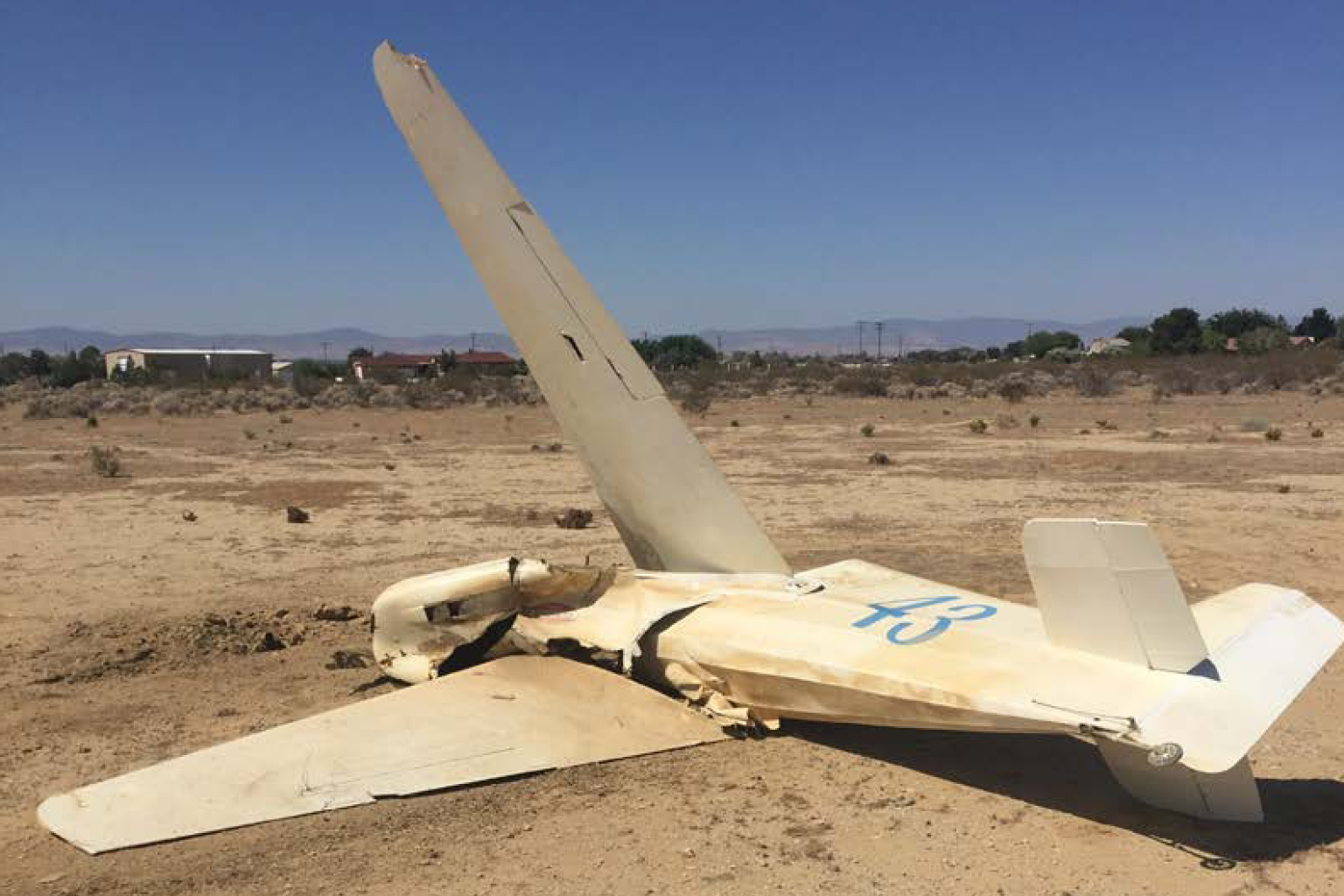
- Rosamond, California, July 14, 2018 (N43SJ, Cassutt IIIM, E-AB). NTSB probable cause: the pilot's failure to maintain airspeed after a partial power loss, with "a loose primary venturi in the carburetor due to improper maintenance" as a contributing factor. The teardown also found a missing cotter pin, an excessively rich idle circuit, a worn mixture-control shaft hole, and a float set too low. The examination suggested the AD had not been accomplished, but with no records of the carburetor's maintenance history, compliance could not be confirmed. Minor injuries.
- Hampstead, Jamaica, May 5, 2023 (N3254B, ERCO 415-C Ercoupe). The O-200-A quit en route; the pilot was killed and the passenger seriously injured. The MA-3SPA was found clean and intact with a two-piece venturi installed. Investigators found no entry in the records demonstrating compliance with "FAA Accessory AD 98-01-06." The Jamaica CAA did not blame the venturi. It pointed to possible fuel contamination, carburetor icing, or blockage (the carb's finger strainer was missing), and cited an overweight airplane and an unworn shoulder harness. Its recommendation to operators: make sure all ADs, "including those applicable to accessories," are accomplished.
Field Notes
Does it apply?
- Covered: MA-3, MA-3A, MA-3PA, MA-3SPA, and MA-4SPA carburetors (formerly Marvel-Schebler, Facet, and Precision Airmotive). The FAA estimated 30,000 on U.S.-registered aircraft in 1998.
- Already one-piece, no action needed (unless the engine later runs rough or loses power): a "V" stamped or etched on the lower data plate; a black, yellow, or blue Precision Airmotive plate; or a black Facet plate with a serial number starting with 750.
What the AD requires:

Worth Knowing:
- Install it right. MSA-2 Rev 3 calls for the M-83 tool, legs seated flush, no old retainer clips, and a "V" stamped on the nameplate. The SB warns that improper installation alone can cause roughness.
- The AD wins. MSA-2 still says replacement is mandatory and immediate, and the nozzle SBs call the nozzle optional or recommended. The AD says the reverse on both.
- Records: this is an appliance AD. Give the carburetor its own logbook trail; it's easy to miss when the review stops at airframe, engine, and propeller ADs.
- Cost: a one-piece venturi such as P/N 46-F12 runs roughly $140 to $160 today. The FAA estimated about 2 hours of labor in 1998.
Carb ice: a separate hazard in the same airbox:
The same venturi pressure drop, plus fuel evaporation, can chill the air in the carburetor by as much as 60 to 70°F. The FAA's Pilot's Handbook of Aeronautical Knowledge says carb ice is most likely below 70°F with humidity above 80%, but can form at temperatures as high as 100°F. The Jamaica flight was at 88°F with a 75°F dew point, inside the icing envelope by the investigators' reading.
Why It Matters: AD 98-01-06 is a rare case of the FAA un-requiring its own fix, and the paperwork never fully caught up. The original service bulletin still reads MANDATORY. The nozzle bulletins read optional, even where the AD requires them. Some parts listings still describe the old AD. In practice, every remaining two-piece venturi, long out of production, has to be checked at every inspection. Every one-piece conversion has to be installed precisely, and on the listed Continentals it has to get its nozzle.
The 1991 crash helped push the FAA to act. The two recent accidents came down to a different gap: nobody could show from the records whether the carburetor AD had been done. Whether you fly a certificated Ercoupe or an experimental racer with a certificated carb, the carburetor has its own AD history, and it should have its own logbook trail. If your records can't answer "one-piece or two-piece?", pull the airbox and find out.
For amateur-built owners there is an extra wrinkle. FAA guidance in AC 39-7D says that unless an AD states otherwise, it applies only to type-certificated aircraft, including ADs on engines and appliances. Whether AD 98-01-06, which covers these carburetors "installed on but not limited to" the listed engines, reaches a homebuilt is the kind of question we took on in "E stands for Experimental not Exemption." The carburetor doesn't care how that argument comes out. The Cassutt's loose primary venturi was exactly the condition this AD inspects for, and the NTSB cited it as a contributing factor all the same.
Sources: FAA AD 98-01-06, Amendment 39-10270 (63 FR 1335, Jan. 9, 1998); NPRM Docket 97-ANE-16 (62 FR 41321, Aug. 1, 1997); FAA AD 93-18-03 (Amdt. 39-8688); FAA AD 63-22-03 (Amdt. 636, Oct. 30, 1963); NTSB Safety Recommendation A-92-5 (Jan. 24, 1992); NTSB Final Report NYC91FA246 (N65729); Precision Airmotive SB MSA-2 Rev 1 (11/11/91), Rev 2 (12/28/93), Rev 3 (10/10/95); Precision Airmotive SBs MSA-7 (9/30/94), MSA-8 (7/10/95), MSA-9 (10/10/95); NTSB Final Report WPR18LA196 (N43SJ); NTSB Engine & Accessory Examination, WPR18LA196 (Sept. 26, 2019); Jamaica Civil Aviation Authority Final Report JA-2023-01 (N3254B); FAA Pilot's Handbook of Aeronautical Knowledge, Ch. 7; FAA AC 39-7D; TBX, "E stands for Experimental not Exemption."
Does this AD apply to your aircraft?
TBX helps you track AD applicability and compliance across your fleet, so you know where every aircraft stands.
10-day free trial
LogIQ: AI for Logbooks
Turn decades of aircraft records into searchable intelligence. Ask questions, spot potential discrepancies, and get cited answers in seconds.
See How LogIQ WorksMore ADs of the Week


Stay Ahead of Every AD
TBX tracks applicability and compliane across your fleet, and LogIQ turns your logbooks into answers, so next week’s AD is already on your radar.


